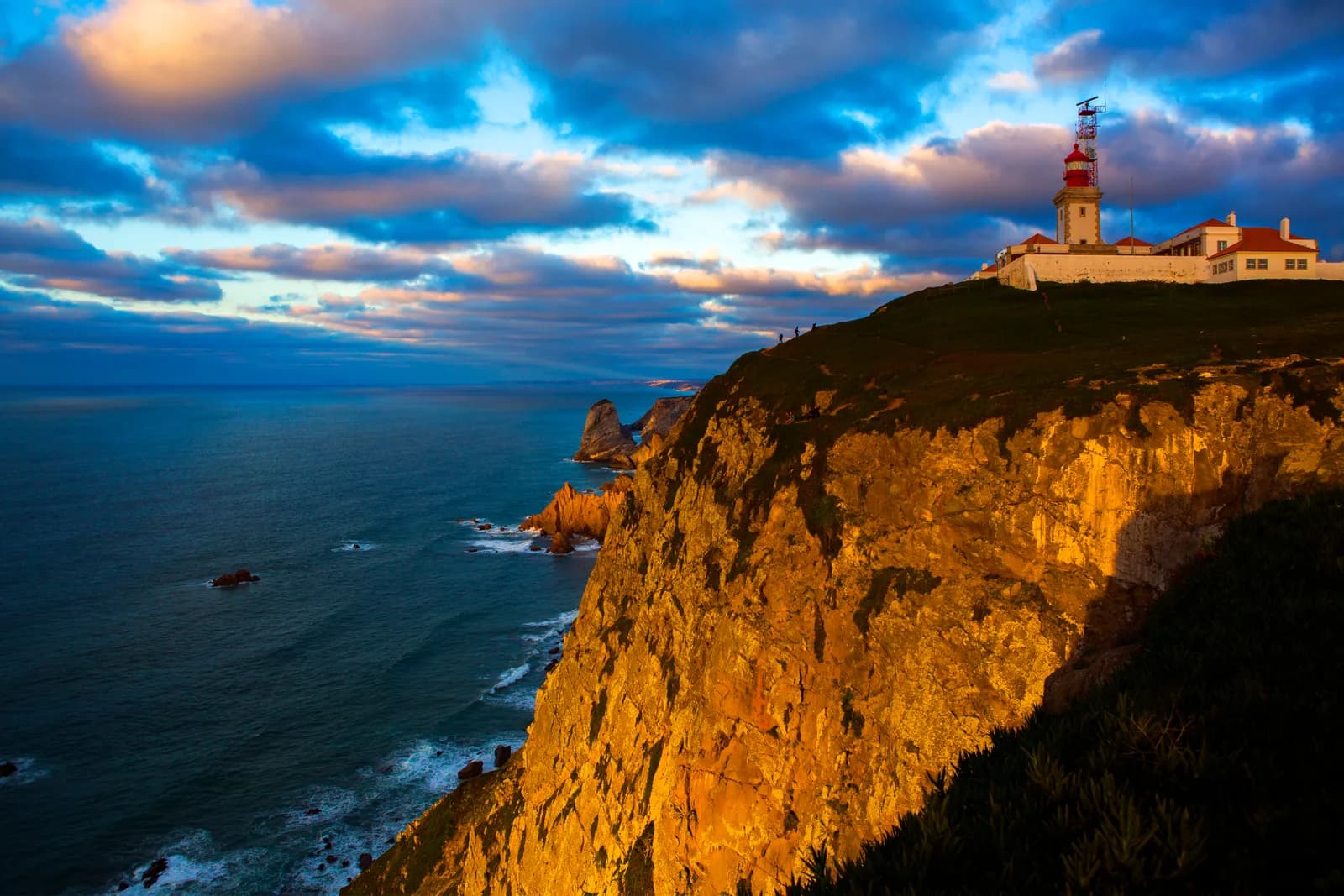
Cabo da Roca
Europe's westernmost point: reasonable by car, risky by bus on a port day.
Listing reviewed October 2026 · Confirm hours and prices with the official venue before visiting
Opening Hours
Always open
Admission Price
Free Entry
Visit Duration
30-60 minutes (add about 45 minutes for the lighthouse)
About This Attraction
Cabo da Roca is the westernmost point of mainland Europe: a windswept headland about 140 metres above the Atlantic, with a lighthouse, a stone monument quoting Camões and very little else. The visit itself takes 30 to 60 minutes. Getting there is the problem on a port day. There is no direct public transport from the cruise terminal. The usual route is via Cascais: walk or take a taxi to Cais do Sodré, take the train to Cascais (33 to 40 minutes), then Carris Metropolitana bus 1624 from the Cascais bus terminal. In the October 2026 timetable it runs about every 30 minutes in the daytime and takes 30 to 35 minutes to the cape. From Sintra station, bus 1253 also serves the cape. Either way, each leg depends on the one before, and you have to catch a specific bus back from an exposed headland. By public transport, Cabo da Roca adds 2 to 2.5 hours to a Cascais trip. On a call under 9 hours, we would not attempt it by bus. With a taxi or private driver it becomes reasonable on an 8-hour call, usually combined with Cascais and the coast road past Guincho; agree the price and the return time before you set off. Once there, the free viewpoint by the monument and the cliff-top paths are the point of the trip. Since July 2026 the lighthouse has been open to visitors: the Essential Visit (5 euros) covers a new interpretation centre and the courtyard, and the Panoramic Visit (10 euros for adults) adds an accompanied climb to the lighthouse balcony. On a tight schedule, the free viewpoint is enough. The 11-euro certificate sold at the tourism office is a souvenir, not a reason to go. Check the forecast before committing: wind is constant and fog is common, and in fog there is nothing to see. Do not combine Cabo da Roca with Pena and Sintra on the same port day.
History
Roman geographers knew the headland as Promontorium Magnum. In The Lusiads (1572), Luís de Camões described Portugal as the place "where the land ends and the sea begins", and the line is quoted on the monument beside the cross at the cape. The lighthouse was one of six ordered by the Marquis of Pombal's charter of 1 February 1758 and came into service in 1772; it is the second-oldest lighthouse still operating on the Portuguese coast. The headland lies within the Sintra-Cascais Natural Park. In July 2026 Parques de Sintra opened the lighthouse to the public, with an interpretation centre on lighthouses and navigation.
Why It Matters
At about 38°47'N, 9°30'W, the cape is the westernmost point of the European mainland, which is why nearly every coastal tour from Lisbon stops here. Its lighthouse has guided shipping off this coast for more than 250 years. The surrounding cliffs and coastal scrub are protected within the Sintra-Cascais Natural Park, a stretch of undeveloped Atlantic coast within an hour of the capital.
Photo Gallery
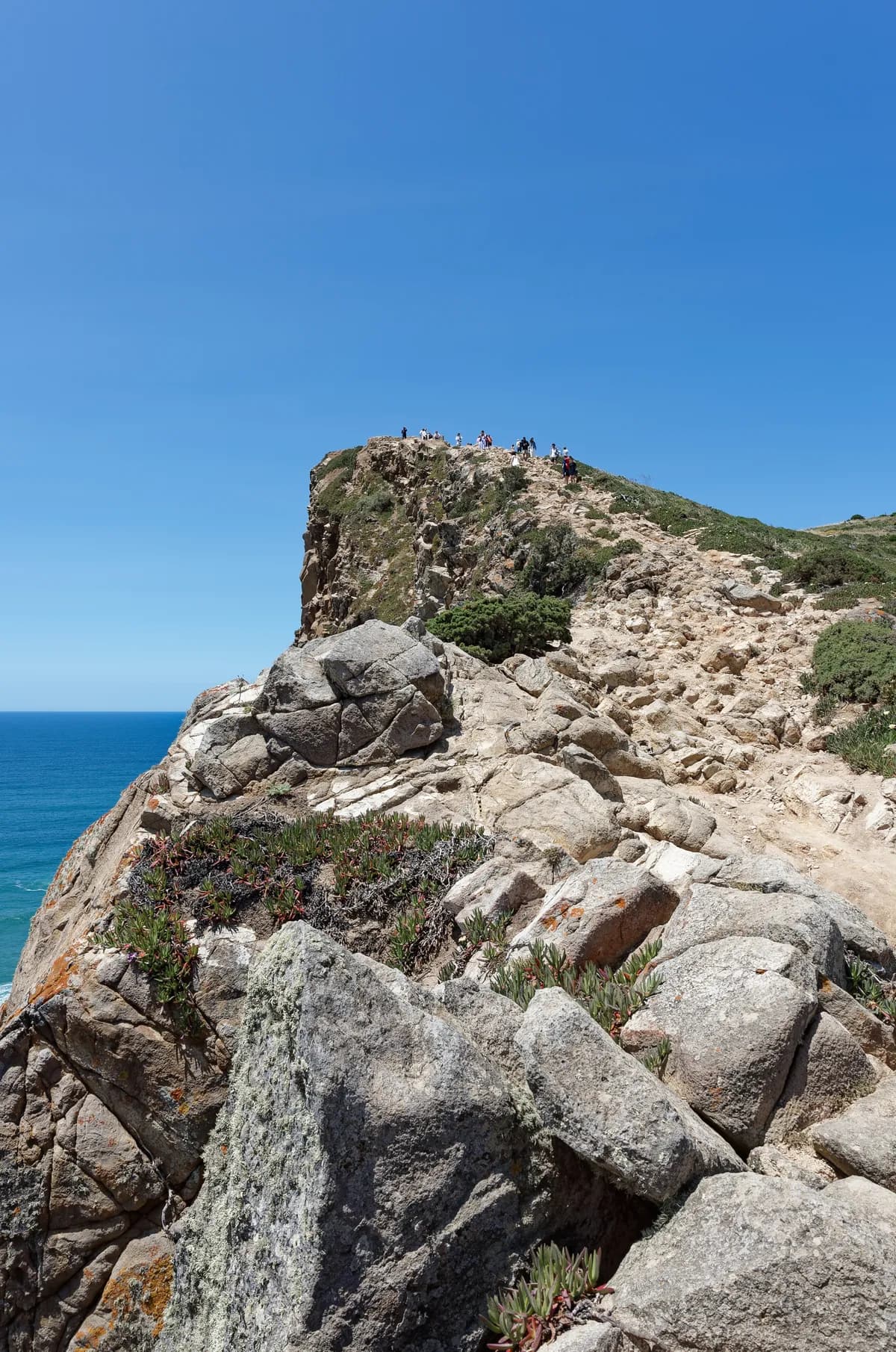
Cabo da Roca. Photo: Jakub Hałun, CC BY 4.0, via Wikimedia Commons
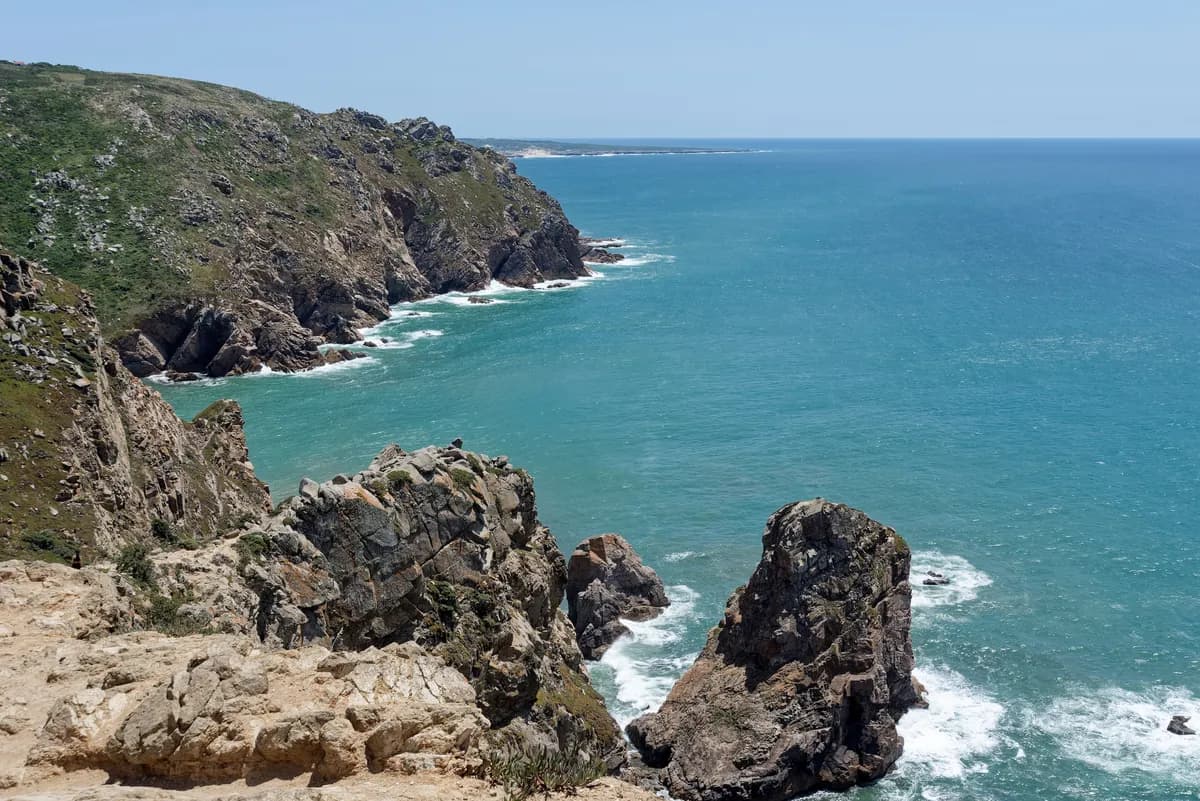
Cabo da Roca. Photo: Jakub Hałun, CC BY 4.0, via Wikimedia Commons
Tips for Cruise PassengersEssential Info
Difficult by public transport: a walk or taxi, a train and a bus on winding roads, with fixed return times. On site, paved paths lead from the bus stop and car park to the monument, but strong wind and uneven ground make the cliff-top paths hard going for anyone with limited mobility.
Time from port: At least 9 hours ashore by public transport via Cascais; about 8 hours with a taxi or private driver
Take Carris Metropolitana bus 1624 from the Cascais bus terminal, a short walk from the train station; it takes 30 to 35 minutes to the cape.
Bus 1624 costs 2.70 euros bought on board or 1.55 euros with pre-paid credit on a Navegante card.
In the October 2026 timetable, daytime buses via the cape leave Cascais from about 09:10 on weekdays and 09:40 at weekends; the first and last journeys of the day skip the cape stop.
Check the time of the bus back before you leave the cape stop; the last daytime departures towards Cascais are around 19:10-19:20.
The lighthouse courtyard and interpretation centre open 09:30-17:30 (last entry 17:00); Panoramic Visit balcony climbs are accompanied, so book online on the Parques de Sintra ticket site.
The 11-euro certificate is sold at the Cabo da Roca tourism office, open daily 09:00-18:30 (October to April) or 09:00-19:30 (May to September).
With a taxi from Cascais (about 20 minutes each way), agree a waiting time: you cannot count on finding a free taxi at the cape.
Bring a windproof layer even in summer, keep behind the fences, and skip the trip altogether if the forecast is foggy.
What Makes This Special
- starWesternmost point of mainland Europe, about 38°47'N, 9°30'W
- starCliffs about 140 metres above the Atlantic
- starMonument and cross with Camões's line "where the land ends and the sea begins"
- starLighthouse in service since 1772, open to visitors since July 2026
- starLighthouse interpretation centre and accompanied climb to the balcony (Panoramic Visit)
- starViews north towards Praia da Ursa and south along the coast towards Guincho
- starPart of the Sintra-Cascais Natural Park
Getting There
Address
Estrada do Cabo da Roca, Sintra
From Cruise Port
No direct public transport. Walk 26 to 28 minutes (or taxi about 10 minutes) to Cais do Sodré, take the Cascais-line train (33-40 minutes), then Carris Metropolitana bus 1624 from the Cascais bus terminal (30-35 minutes, about every 30 minutes in the daytime). Allow about 2 hours each way by public transport. By taxi or private car, about 45 minutes.