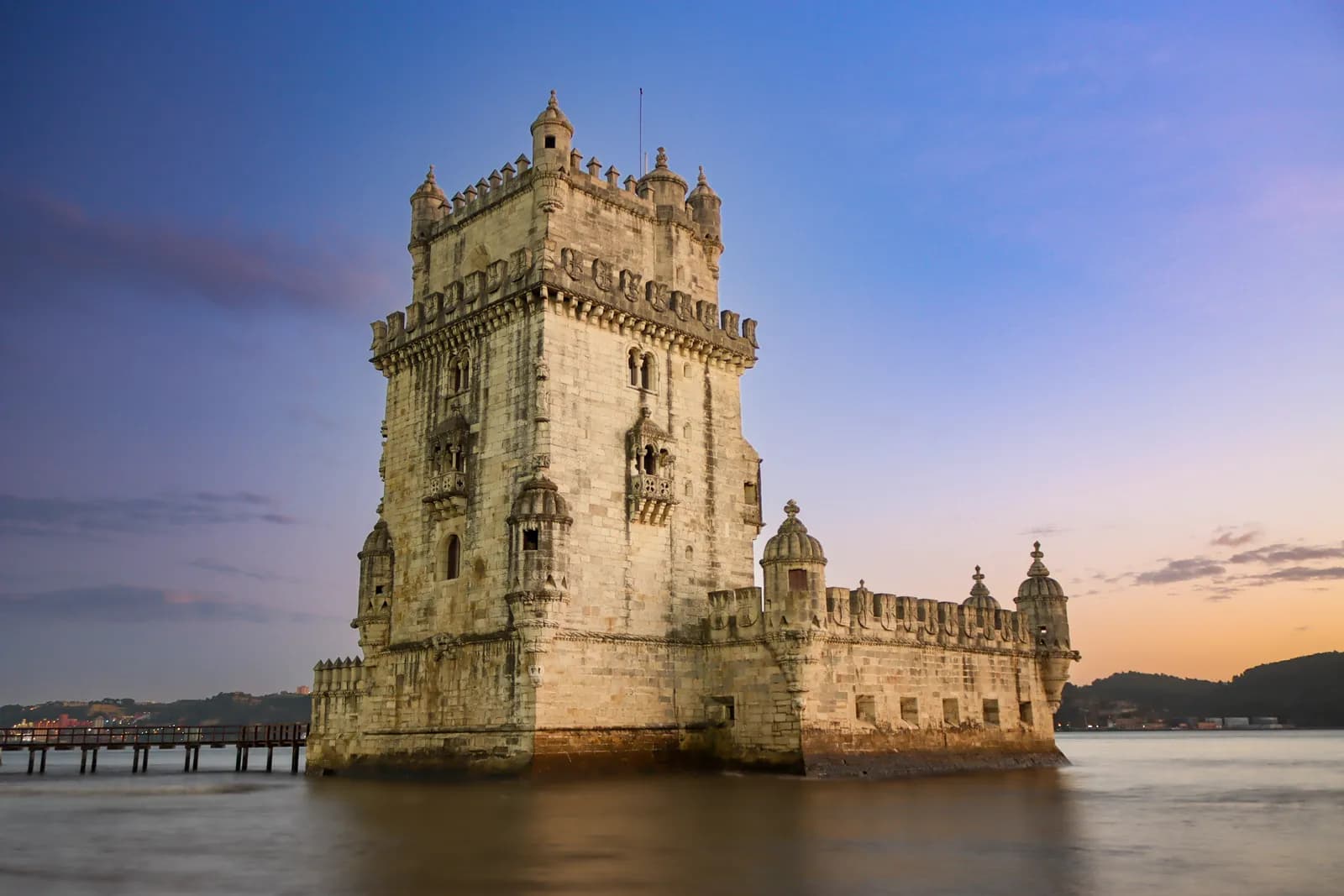
Torre de Belém (Belém Tower)
Reopened in May 2026 with timed half-hour slots; the carved exterior is free, the interior is tight
Listing reviewed October 2026 · Confirm hours and prices with the official venue before visiting
Opening Hours
09:30 - 17:30, closed Mondays
Admission Price
€15 per adult
Visit Duration
30–45 minutes inside; 15 minutes for exterior photos
About This Attraction
The Torre de Belém reopened on 27 May 2026 after about a year of conservation work, the first major intervention since 1998. Entry now works on timed slots: up to 60 people every half hour, about 900 a day, from 09:30 to the last entry at 17:00. It is closed on Mondays. Tickets (€15) are sold online and at the ticket kiosk in front of the Jerónimos Monastery, about 1.2 km away, which matters if you arrive without a booking: buy there before walking to the tower. Whether to go inside on a short call is the key decision. The interior is small: a bastion with gun ports at water level, then a tower of stacked rooms linked by a narrow spiral staircase, ending in a rooftop terrace with river views. Most visits take 30–45 minutes. The carving that makes the tower famous, with rope mouldings, armillary spheres and a stone rhinoceros head beneath one of the turrets, is on the outside and costs nothing to see from the riverside lawn and promenade. If you have less than four hours ashore, or if stairs and tight spaces are a problem, photographing the exterior and spending the money on the Jerónimos cloister is the better trade. The tower is the westernmost of the Belém sights. From the Jerónimos Monastery it is about 17 minutes on foot; from the Padrão dos Descobrimentos about 12 minutes along the river. A practical loop is Jerónimos first, then Pastéis de Belém and the Padrão, with the tower last before a taxi or app car back to the ship. Built in 1514–1519 on a rock in the Tagus to guard the harbour entrance, it is listed by UNESCO together with the monastery. Large bags, food and drink are not allowed inside.
History
A fortress to guard the mouth of the Tagus had been planned under João II, but it was Manuel I who had Francisco de Arruda, an architect experienced in military works, build it between 1514 and 1519. Dedicated to Saint Vincent, Lisbon's patron saint, it stood on a basalt outcrop in the river, facing the monastery then rising on the Restelo shore. The chronicler Damião de Góis wrote that it was watched day and night so that no ship could pass unseen. Its south-facing loggia was designed for the court ceremonies that marked fleets leaving and returning. Changes to the shoreline over the centuries have left it much closer to the bank than it was built.
Why It Matters
The tower is the image most associated with Lisbon and with Portugal's maritime expansion, and it was inscribed by UNESCO in 1983 together with the Jerónimos Monastery. It combines a medieval-style keep with a low artillery bastion, then a modern military design, wrapped in Manueline decoration: royal arms, crosses of the Order of Christ, knotted ropes and armillary spheres. The 2025–2026 restoration cleaned the pale lioz limestone back to its original brightness.
Photo Gallery
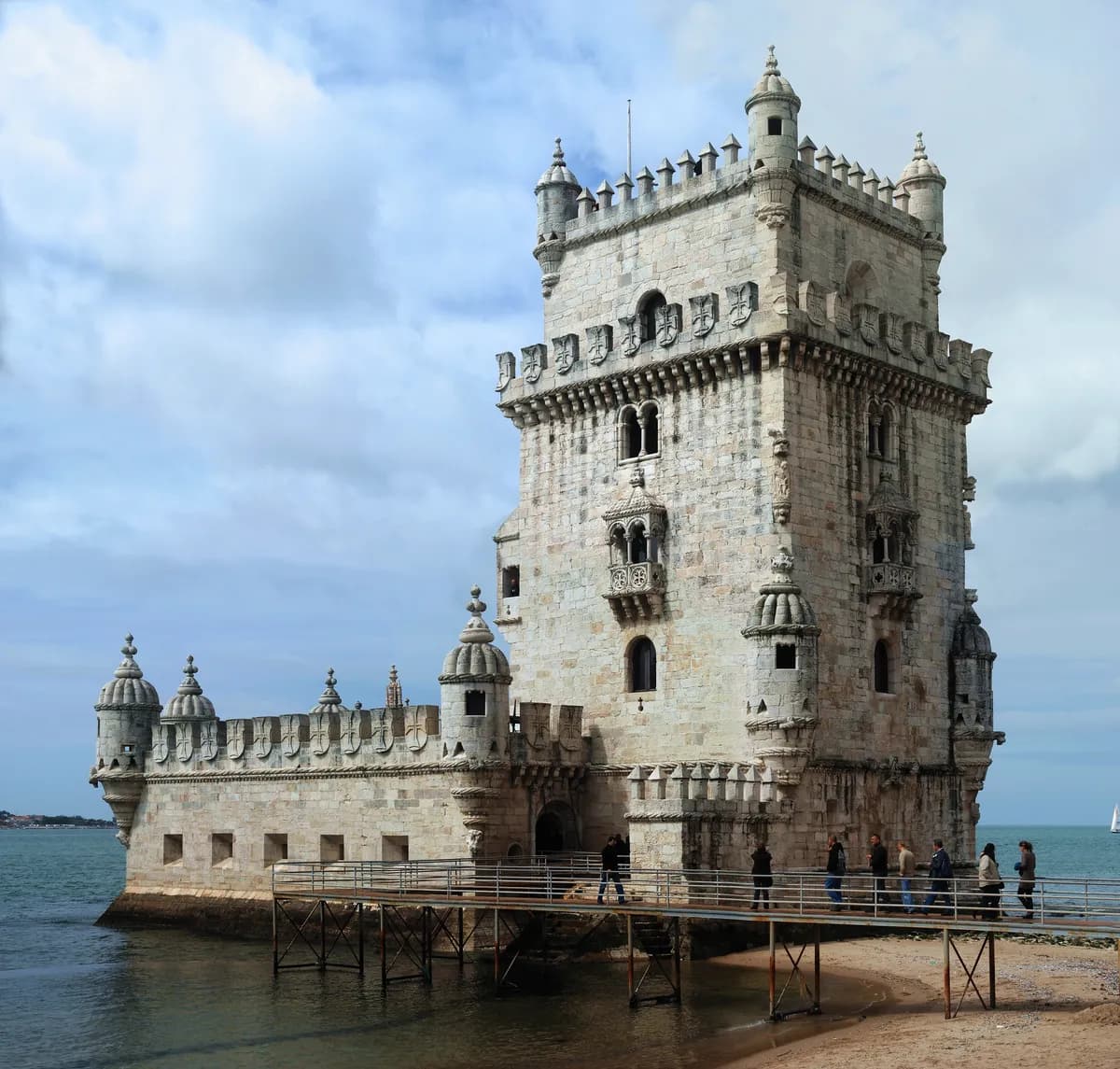
Torre de Belém (Belém Tower). Photo: Alvesgaspar, CC BY-SA 3.0, via Wikimedia Commons
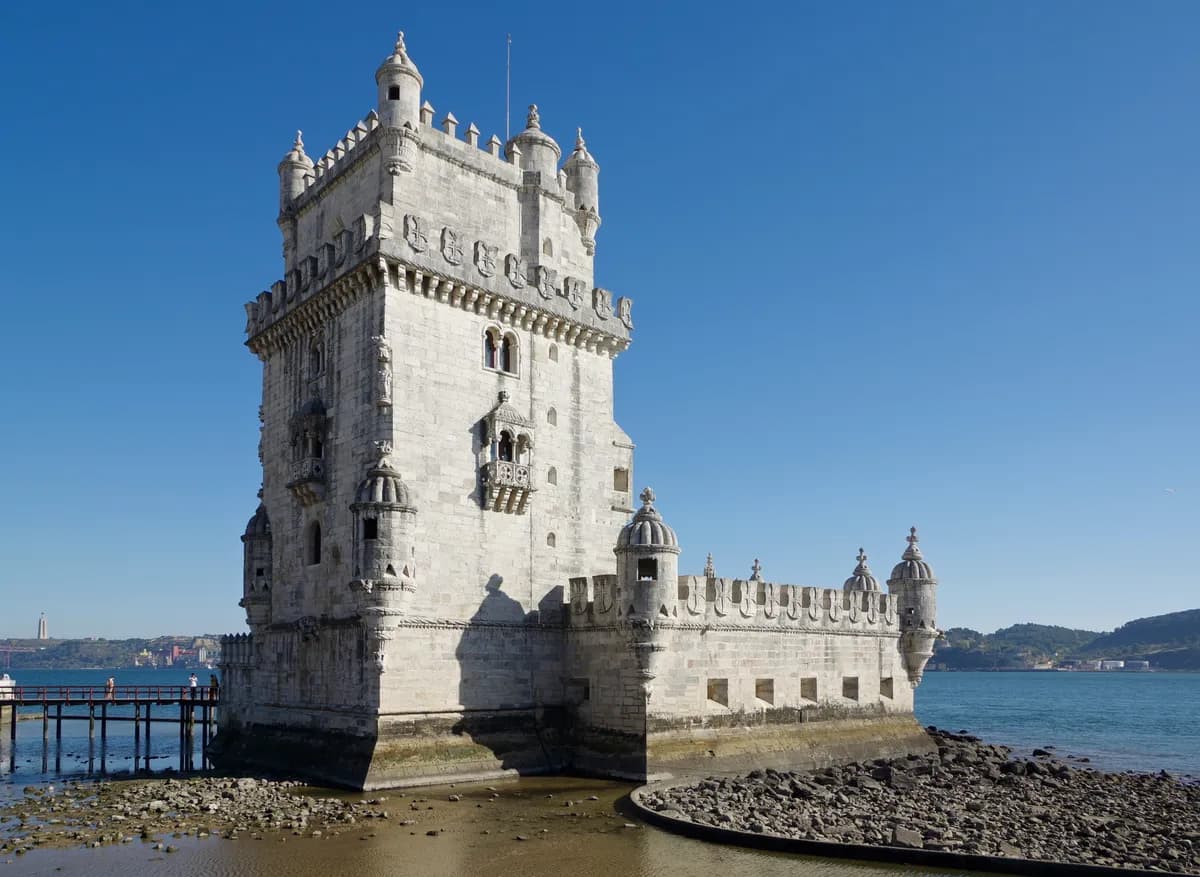
Torre de Belém (Belém Tower). Photo: Berthold Werner, CC BY-SA 4.0, via Wikimedia Commons
Tips for Cruise PassengersEssential Info
Interior not wheelchair accessible beyond the ground floor of the bastion (narrow spiral staircase). The exterior and riverside promenade are level.
Time from port: About 3 hours return from the ship if you go inside; 2–2.5 hours to see it from outside and walk along the river
Closed on Mondays. On other days entry is by half-hour slot (60 people per slot); book online through the official Museus e Monumentos de Portugal ticket office before you leave the ship.
No booking? The ticket office is the kiosk in front of the Jerónimos Monastery, not at the tower, so buy there first.
Last entry is 17:00. With an early all-aboard time, take a morning slot.
The interior has a narrow spiral staircase and low doorways; access for people with reduced mobility is limited to the ground floor of the bastion.
Visitors aged 65+ and 13–24 pay €7.50 with ID; under-12s go free with an adult.
The exterior needs no ticket: the riverside promenade either side of the tower gives the classic photo.
Large bags, food and drink are not allowed inside, so travel light.
Visit it last: it is the westernmost Belém sight, about 17 minutes' walk from Jerónimos, and an app car back to the terminal takes about 20 minutes.
What Makes This Special
- starRiverside exterior with Manueline rope mouldings and armillary spheres (free to view)
- starStone rhinoceros head carved beneath one of the turrets
- starArtillery bastion with gun ports at water level
- starLoggia on the south façade, built for royal ceremonies
- starRooftop terrace with views over the Tagus and the 25 de Abril Bridge
- starLioz limestone freshly cleaned in the 2025–2026 restoration
Getting There
Address
Av. Brasilia, Lisbon
From Cruise Port
About 8.4 km west, not walkable on a port day. Taxi 20 minutes, or tram 15E / the Cascais-line train to Belém followed by a 10-15 minute walk along the river.
Nearby Attractions
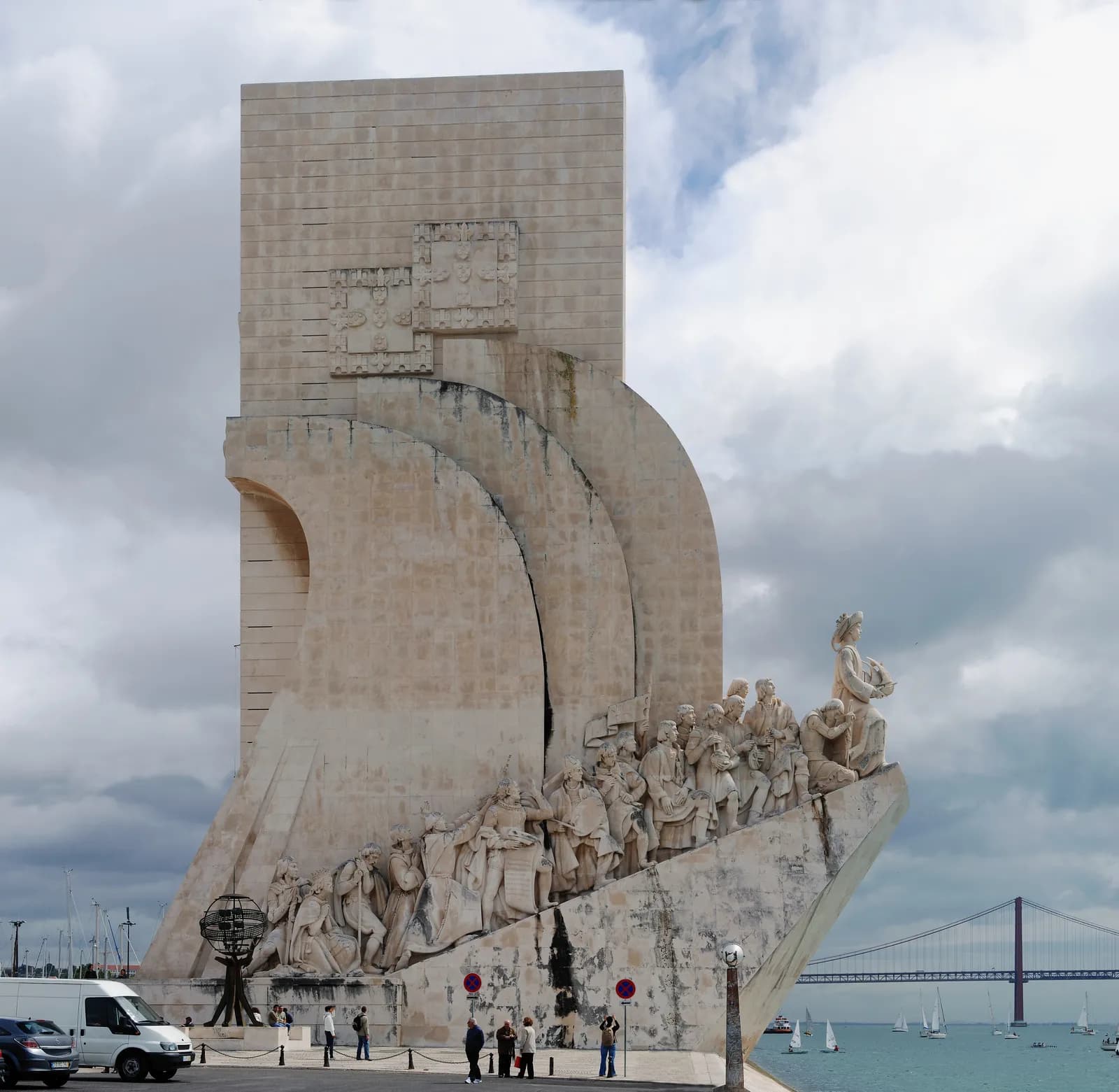
Padrão dos Descobrimentos (Monument to the Discoveries)
Open daily, including Mondays: lift plus 42 steps to a rooftop view over the compass rose
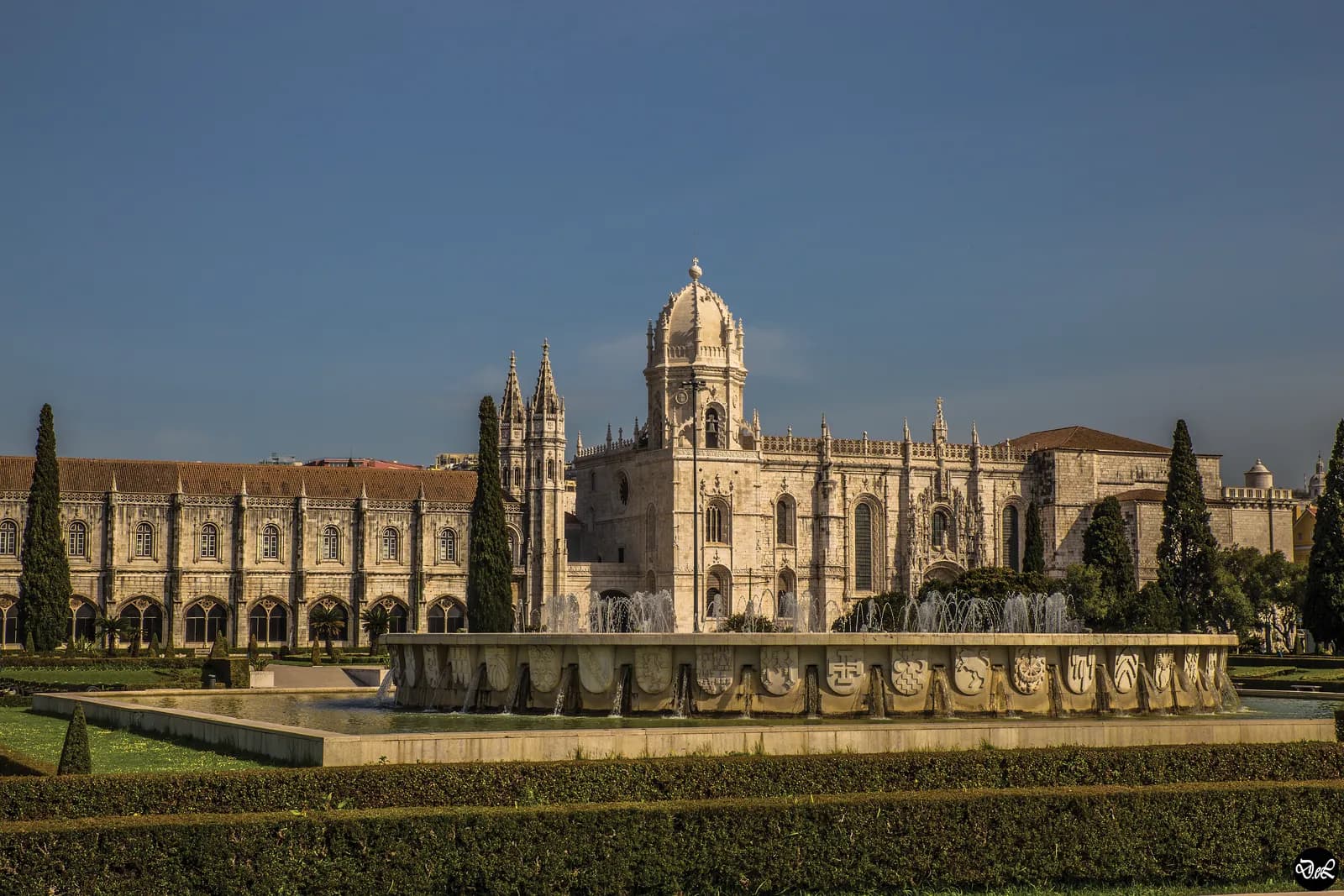
Mosteiro dos Jerónimos (Jerónimos Monastery)
Free church with Vasco da Gama's tomb, paid cloister on timed slots; closed on Mondays
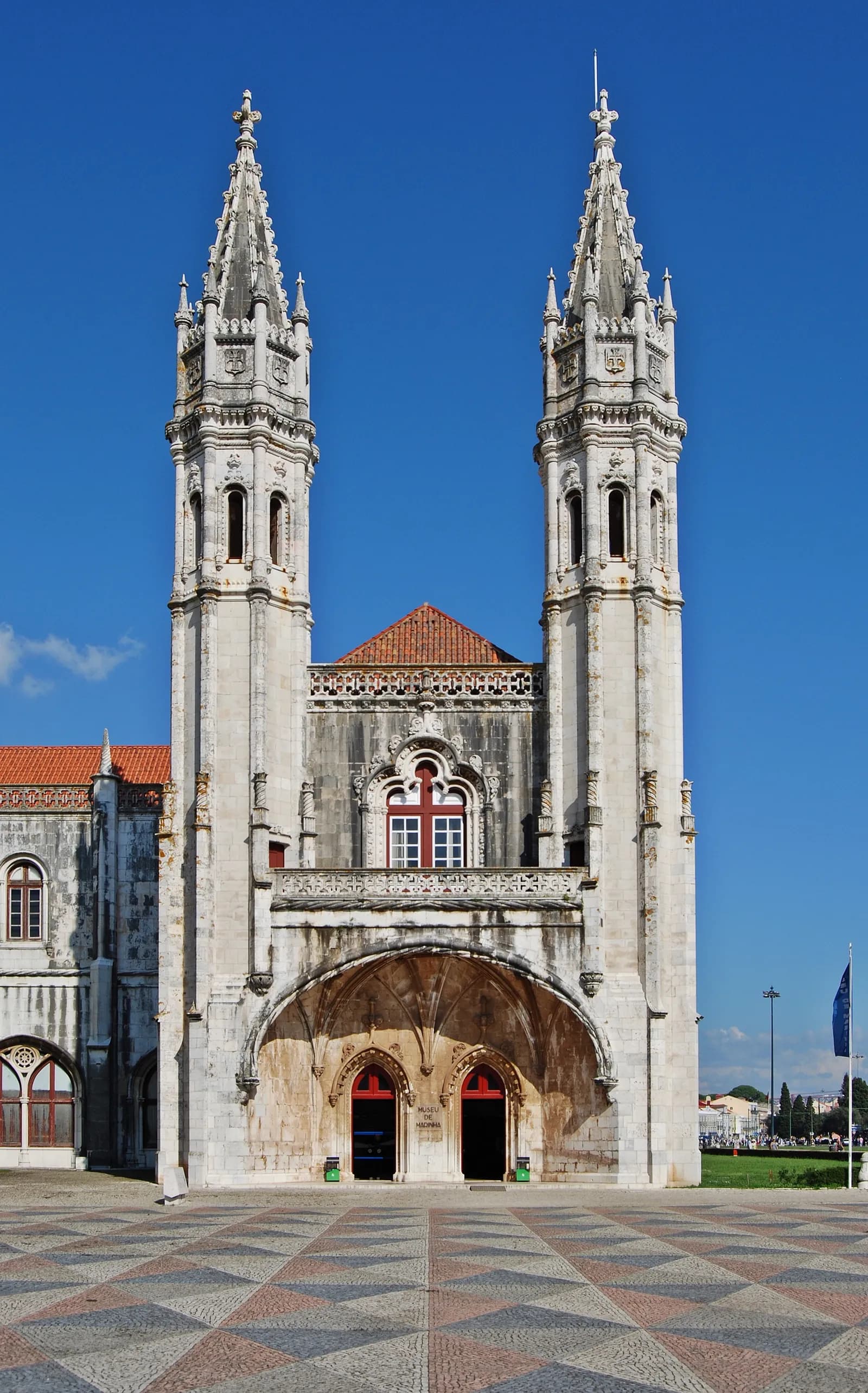
Museu de Marinha (Maritime Museum)
The Navy's museum in the west wing of Jerónimos, best for ship models, royal barges and the 1922 Santa Cruz seaplane
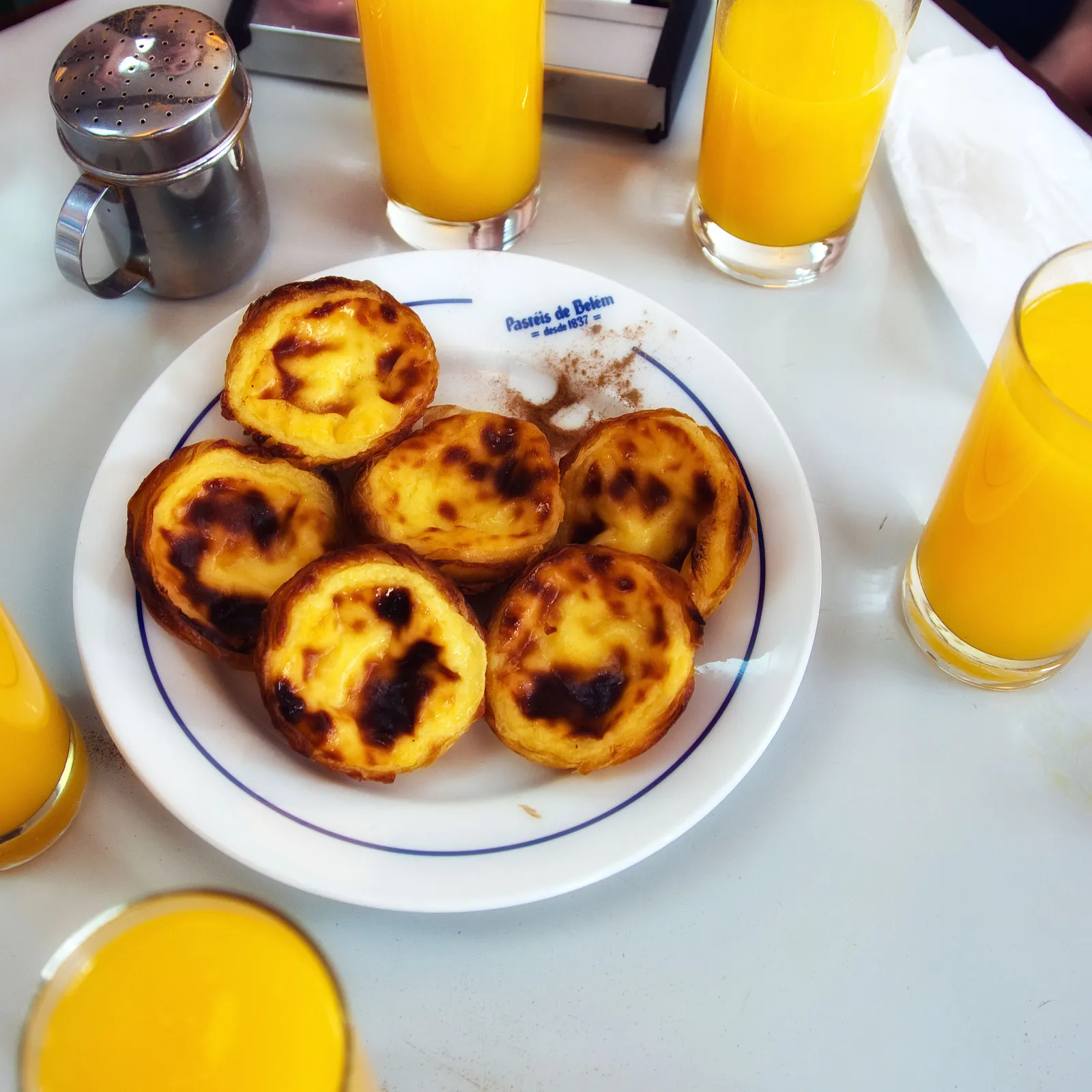
Pastéis de Belém
The original Belém custard tarts since 1837, 230 m from the Jerónimos Monastery and open every day