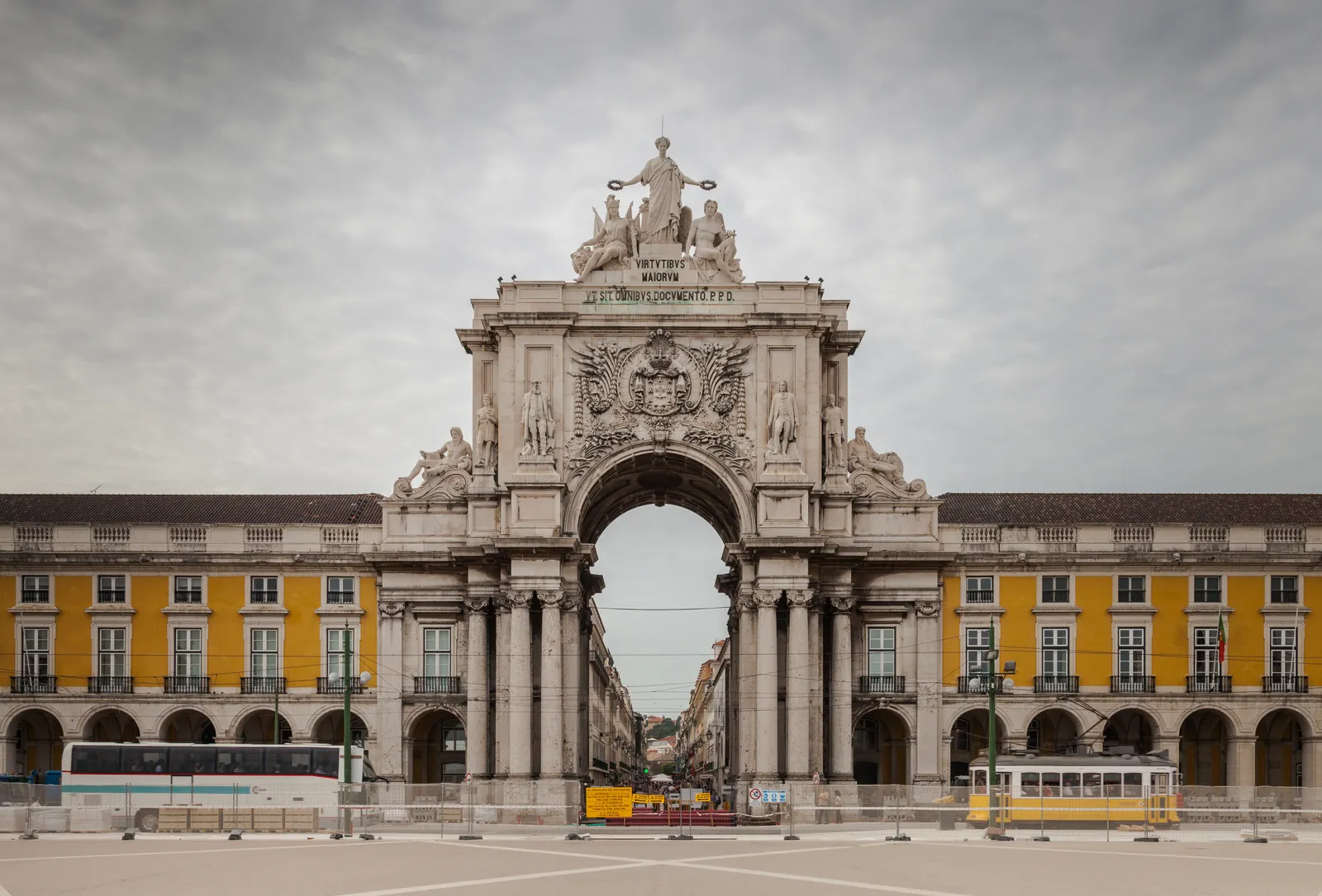
Rua Augusta
The Baixa's main pedestrian street, entered through the arch on Praça do Comércio, under 20 minutes' walk from the ship.
Listing reviewed October 2026 · Confirm hours and prices with the official venue before visiting
Opening Hours
Street open 24 hours
Admission Price
Free Entry
Visit Duration
30–45 minutes to walk the street; add 20–30 minutes for the arch
About This Attraction
Rua Augusta is the easiest walk of a port day: flat, pedestrianised and on the direct route from the ship into central Lisbon. From the terminal, walk west along the river for about 14 minutes to Praça do Comércio, then go through the triumphal arch on the north side of the square, which opens straight onto the street. It runs north for about half a kilometre to Rossio. Treat it as a route rather than a destination. Walk up it, look along the cross streets such as Rua da Conceição and Rua de São Nicolau to see how regular the Pombaline grid is, and stop for coffee or lunch on a parallel street such as Rua dos Correeiros or Rua da Prata rather than at the tables in the middle of Rua Augusta. The shops on the street itself are mostly international chains and souvenir stores. The one paid stop is the top of the Arco da Rua Augusta: €5, daily 10:00–19:00 (last entry 18:30), free with the Lisboa Card. A lift takes you to the second floor, then 74 steps lead to the roof, with a 360° view of Praça do Comércio, the Baixa, the Sé, the castle and the river. Allow 20 to 30 minutes. A small exhibition in the Clock Room covers the history of the arch. The street is busiest from late morning to late afternoon, when tour groups overlap; early in the day you can see the architecture without the crowd. Pickpockets work the busy stretches, so keep phones and wallets zipped away, and walk past street sellers. From the northern end, Rossio and Praça da Figueira are a minute away. The Elevador de Santa Justa, a block west, is closed, so for Chiado walk uphill or take the metro to Baixa-Chiado.
History
Rua Augusta was laid out after the earthquake, tsunami and fire of 1 November 1755 destroyed the lower town. Under the Marquis of Pombal, the engineers Manuel da Maia, Eugénio dos Santos and Carlos Mardel planned the Baixa as a grid of straight streets with uniform buildings built around a timber frame, the 'gaiola pombalina', designed to flex in an earthquake. Rua Augusta became the main axis between the riverside square, rebuilt as Praça do Comércio, and Rossio. Streets were assigned to trades, which survives in names such as Rua do Ouro (gold) and Rua da Prata (silver). The triumphal arch at the river end was completed only in 1875; its top opened to visitors in August 2013.
Why It Matters
The Baixa is one of the earliest large-scale examples of a city rebuilt to a plan after a natural disaster, with building rules meant to resist the next earthquake. Rua Augusta is its spine. For a visitor it is the simplest way to understand the old city's layout: the flat Baixa in the valley, with the castle hill to the east and Chiado to the west.
Photo Gallery
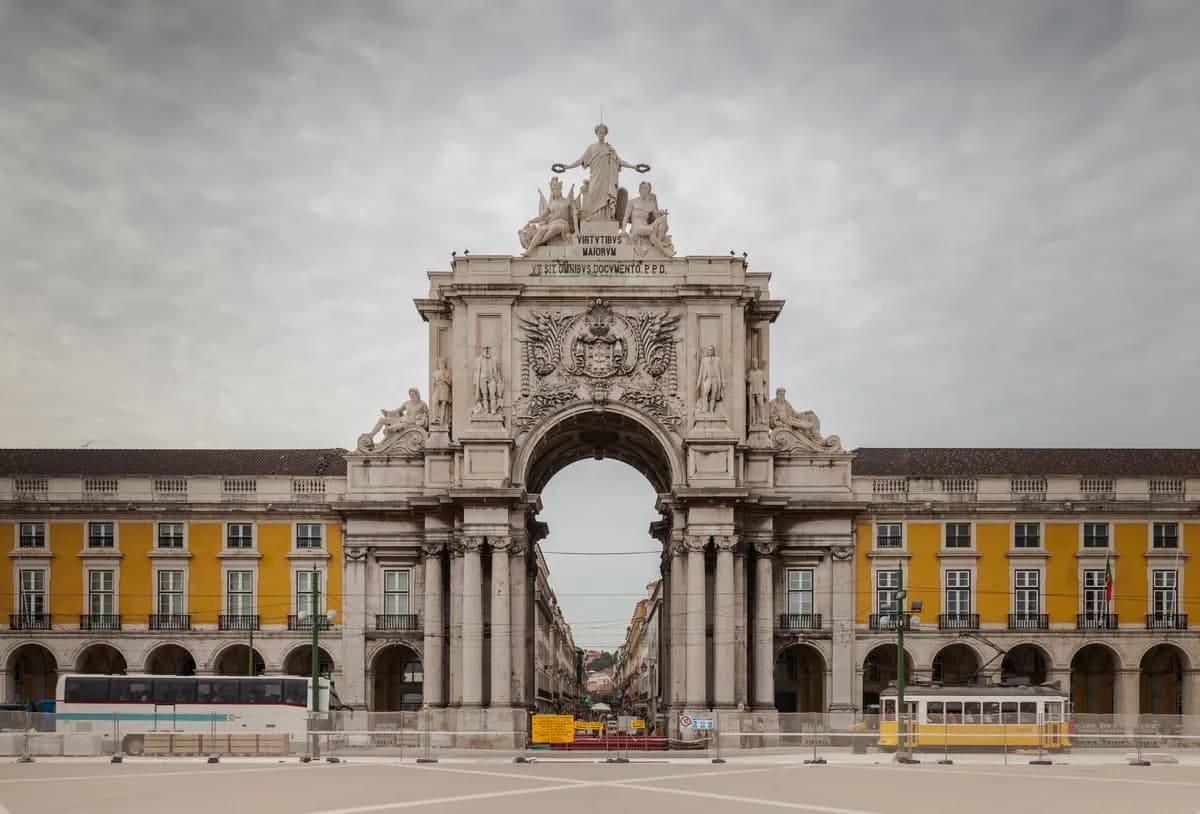
Rua Augusta. Photo: Diego Delso, CC BY-SA 3.0, via Wikimedia Commons
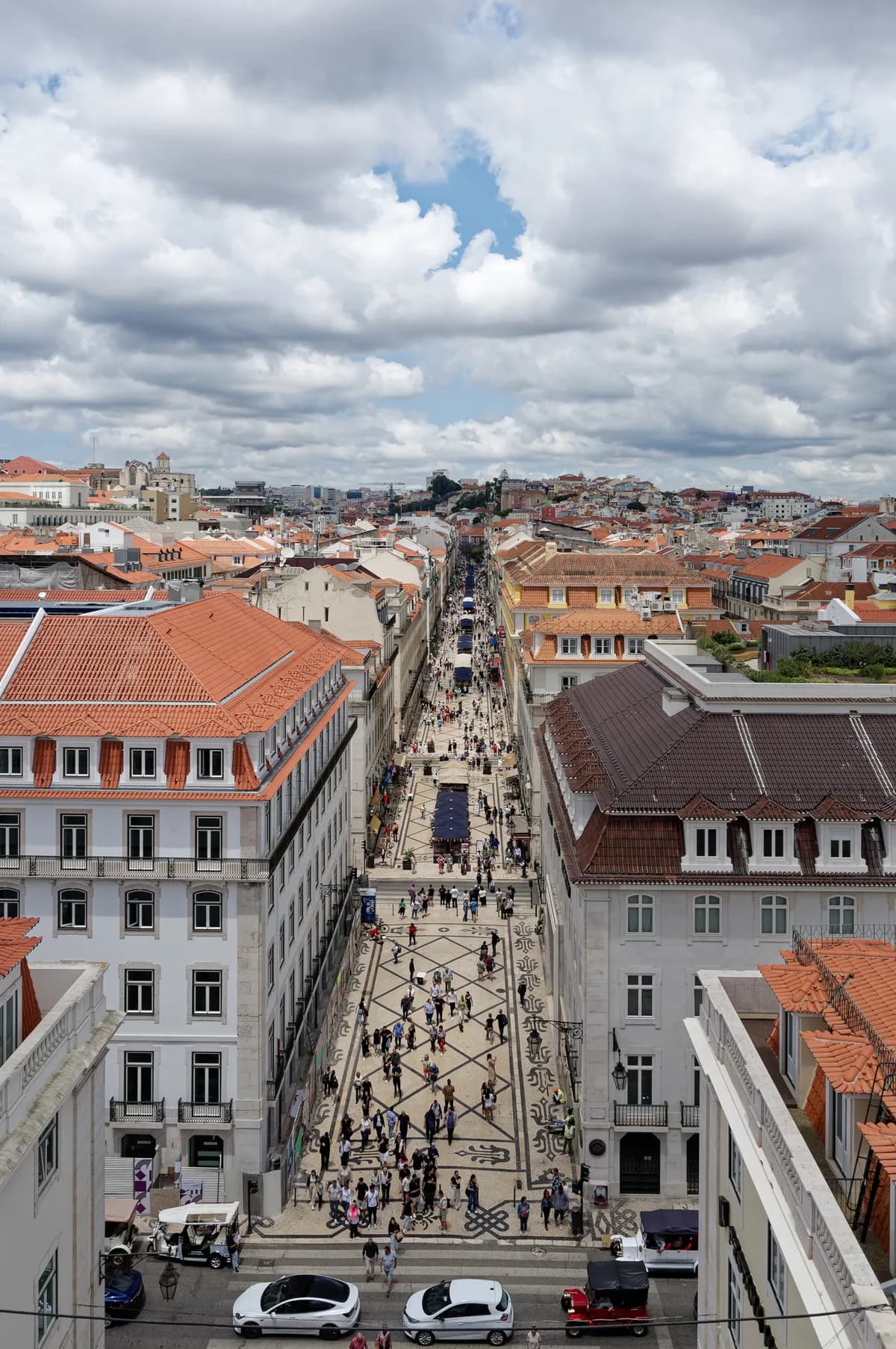
Rua Augusta. Photo: Jakub Hałun, CC BY 4.0, via Wikimedia Commons
Tips for Cruise PassengersEssential Info
Flat and pedestrianised the whole way from the terminal. The paving is calçada (limestone and basalt cobbles), uneven in places and slippery when wet. The arch viewpoint needs 74 steps after the lift.
Time from port: 1.5–2 hours: about 15 minutes' walk each way, 30–45 minutes on the street and 20–30 minutes for the arch
From the terminal, walk about 14 minutes west along the river to Praça do Comércio; the arch on its north side leads straight onto Rua Augusta.
Arch viewpoint: €5, daily 10:00–19:00 (last entry 18:30), children up to 5 free, free with the Lisboa Card.
The arch has a lift to the second floor, then 74 steps to the top: skip it if you cannot manage stairs.
Eat on a parallel street such as Rua dos Correeiros or Rua da Prata rather than at the tables on Rua Augusta itself.
Keep phones and wallets zipped: pickpockets work the crowds here and around the arch. Walk past street sellers.
The Elevador de Santa Justa nearby is closed; for Chiado take the metro Blue Line from Terreiro do Paço to Baixa-Chiado or walk up Rua do Carmo.
To get back, walk the same way, or take the Blue Line from Baixa-Chiado or Terreiro do Paço to Santa Apolónia, about 10 minutes' walk from the terminal.
What Makes This Special
- starFlat, pedestrianised street of about half a kilometre from Praça do Comércio to Rossio
- starArco da Rua Augusta roof: 360° view over the square, the Baixa, the castle and the river (€5)
- starUniform Pombaline façades built after the 1755 earthquake
- starViews along the cross streets of the regular Baixa grid
- starBlack-and-white calçada portuguesa paving
- starDirect, flat walk from the cruise terminal via Praça do Comércio
Getting There
Address
Rua Augusta, Lisbon
From Cruise Port
About 1.2 km and 17 minutes on foot: walk west along the river to Praça do Comércio and pass through the triumphal arch, which opens straight onto Rua Augusta.
Nearby Attractions
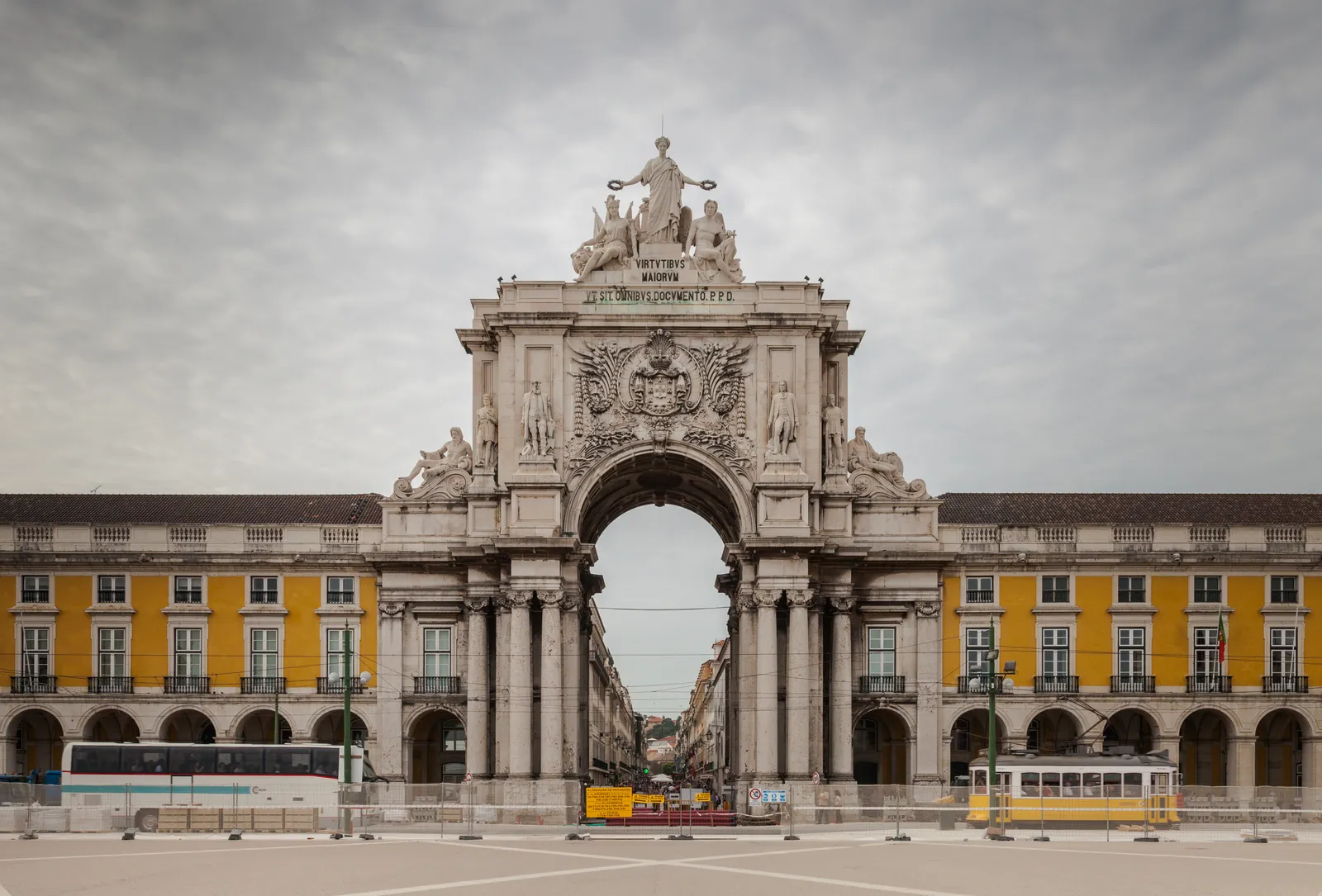
Arco da Rua Augusta
A lift and a short stair climb to a rooftop terrace over Praça do Comércio, 14 minutes' walk from the ship
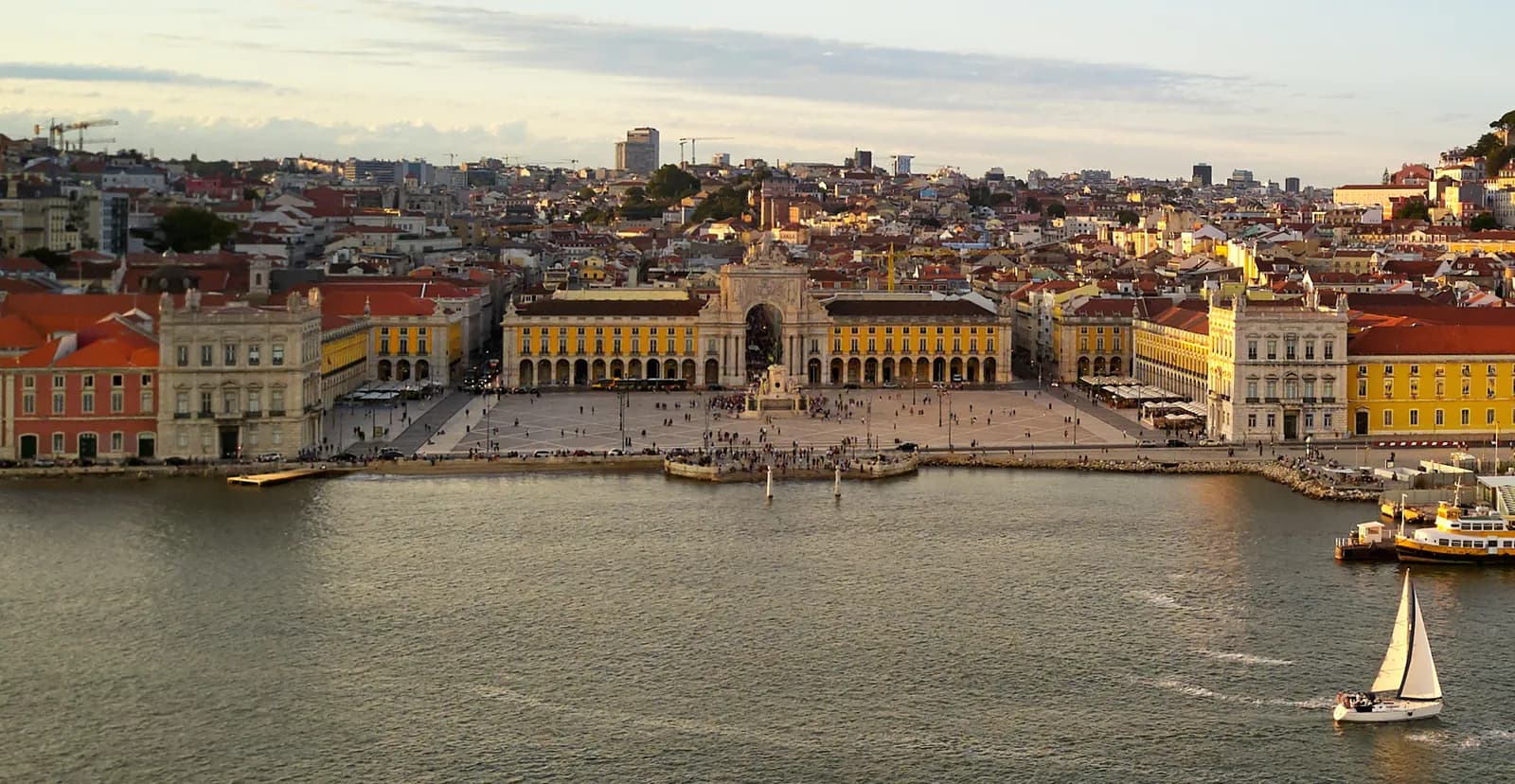
Praça do Comércio (Commerce Square)
The riverside square 14 minutes' flat walk from the cruise terminal, and the natural starting point for a port day in the Baixa
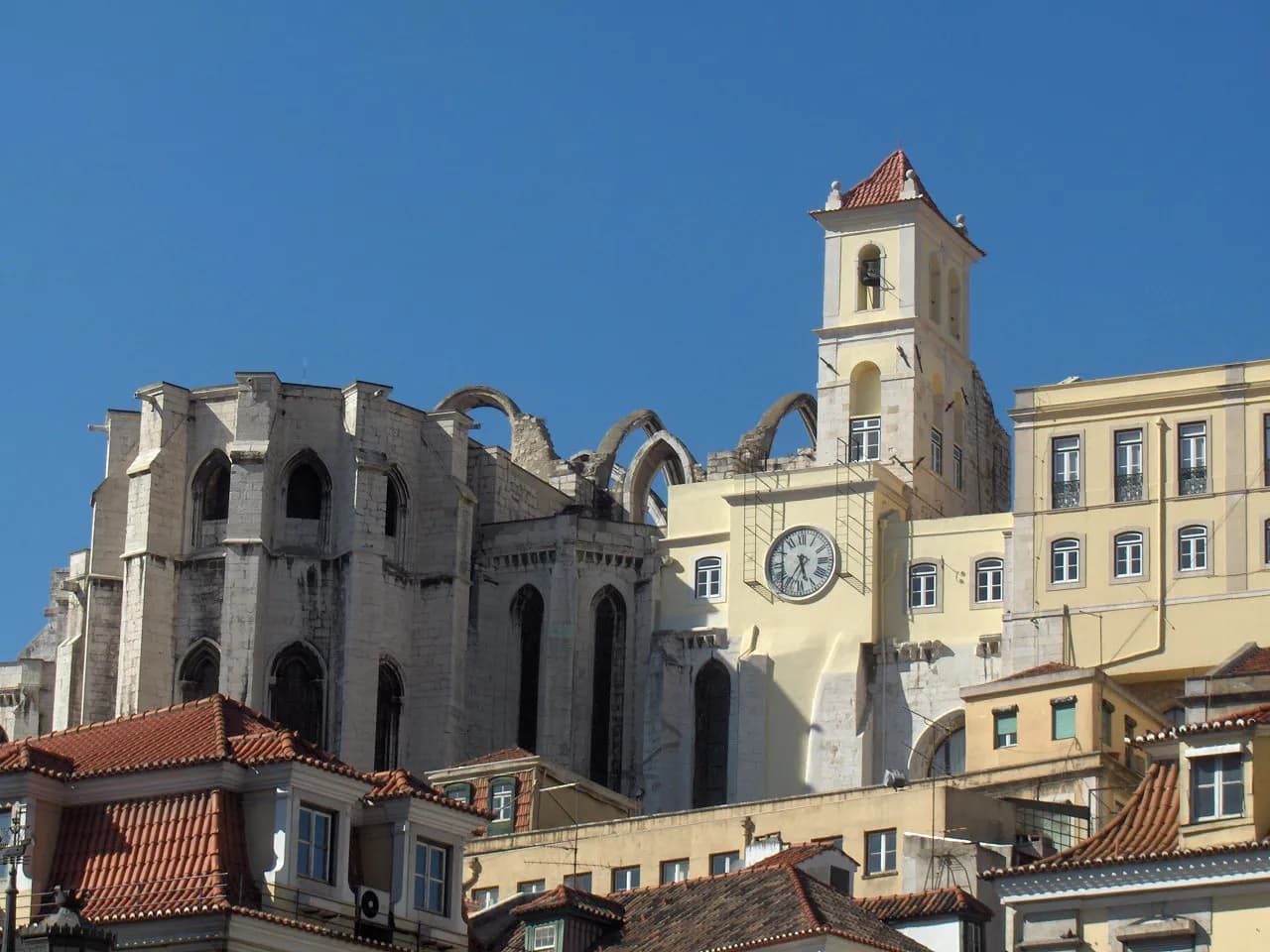
Convento do Carmo and Archaeological Museum
The roofless Gothic church left standing after the 1755 earthquake, now a small archaeology museum in Chiado
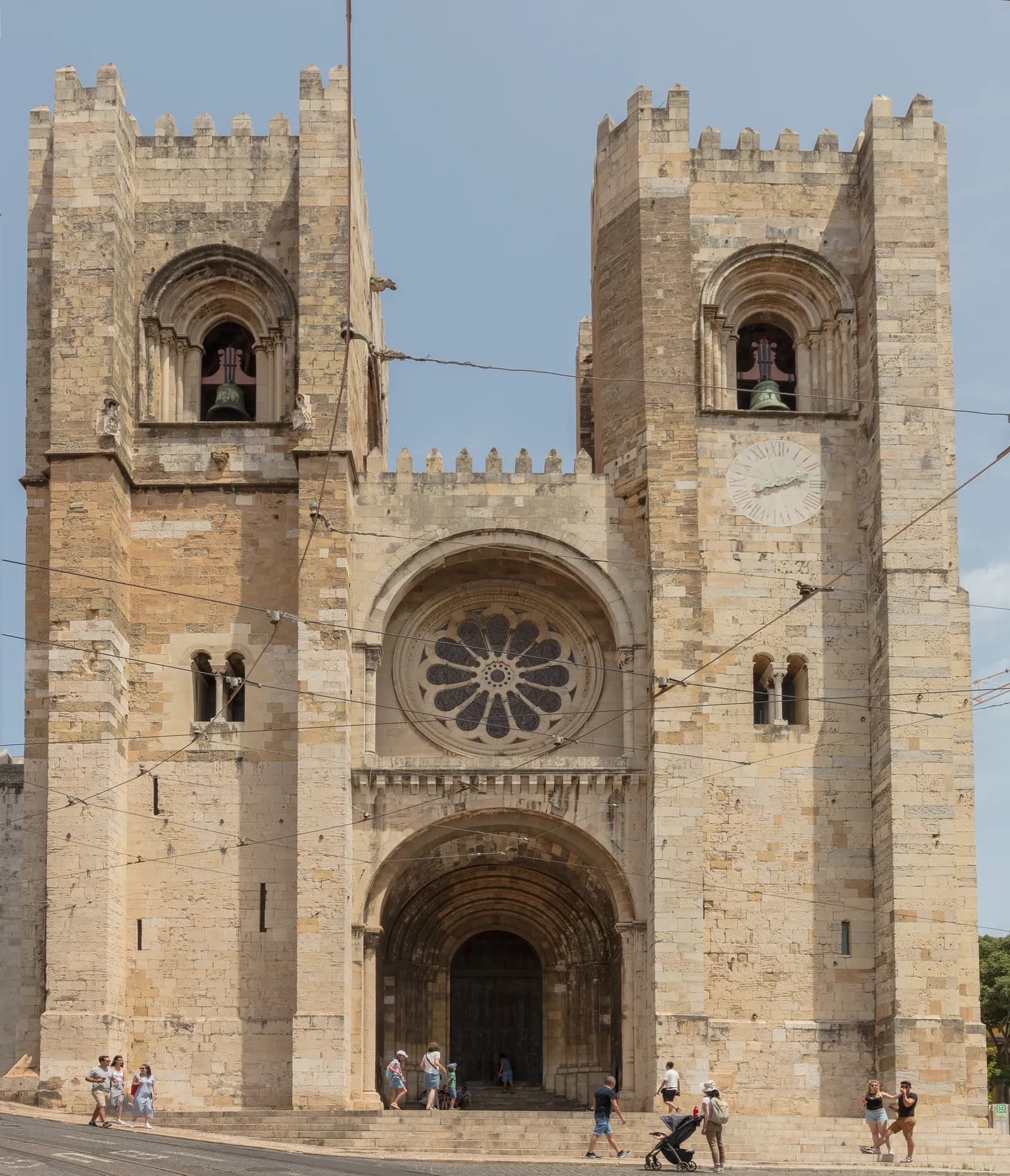
Sé de Lisboa (Lisbon Cathedral)
Lisbon's 12th-century cathedral, a short uphill walk from the ship