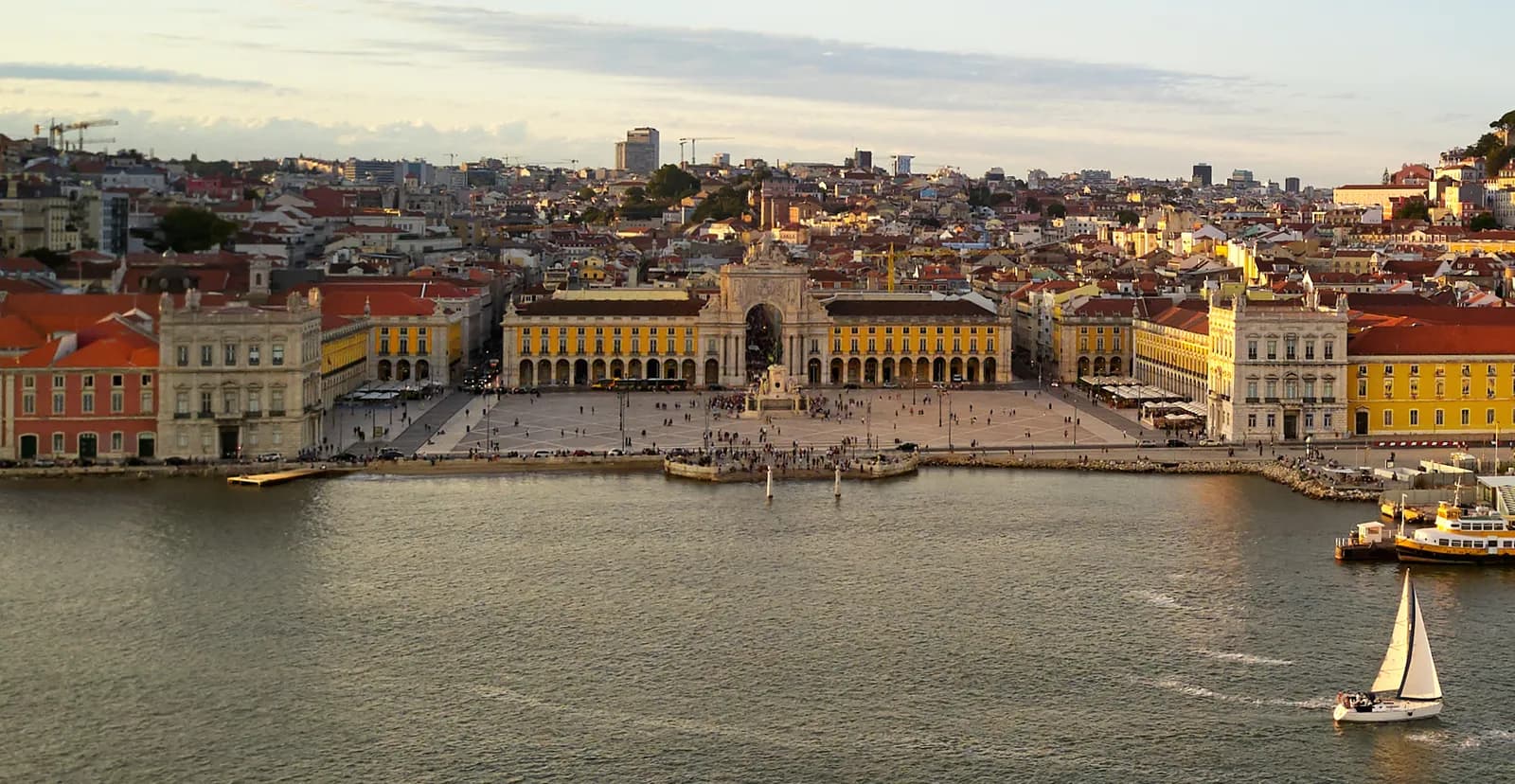
Praça do Comércio (Commerce Square)
The riverside square 14 minutes' flat walk from the cruise terminal, and the natural starting point for a port day in the Baixa
Listing reviewed October 2026 · Confirm hours and prices with the official venue before visiting
Opening Hours
Open 24 hours
Admission Price
Free Entry
Visit Duration
20–30 minutes in the square; 1 hour or more if you add the arch rooftop and a coffee
About This Attraction
For most cruise passengers Praça do Comércio is the first stop and the easiest one. From the Lisbon Cruise Terminal at Jardim do Tabaco, follow Avenida Infante Dom Henrique west with the river on your left: it is about 1 km on the flat, roughly 14 minutes on foot, and the yellow arcades appear ahead of you. No ticket, no opening hours, no queue. The square was laid out after the 1755 earthquake on the site of the destroyed royal palace, which is why it opens straight onto the Tagus rather than onto streets. If you only have an hour or two ashore, use the square as your orientation point rather than a destination in itself. Walk down to Cais das Colunas, the marble steps into the river on the south side, for the classic photo back towards the arch. Then walk through the Arco da Rua Augusta on the north side; if you want a view, the rooftop terrace inside the arch costs €5 and takes 30 to 45 minutes. From there Rua Augusta runs straight into the Baixa grid, Rossio is about 10 minutes ahead, and the Sé cathedral is uphill to the east. Crowds build from mid-morning, when shore excursions and tour groups arrive, and stay heavy until late afternoon. The square is large enough that it never feels packed, but the arch queue and the riverside steps do. Early morning, before 10:00, gives you empty arcades and soft light over the river. What to skip: the restaurants with photo menus and staff inviting you in under the arcades are priced for tourists. If you want a coffee here, Martinho da Arcada in the north-east corner has been trading since 1782, and standing at the counter is usually cheaper than table service. Better-value lunch is a few streets back in the Baixa. Transport from the square is simple. Terreiro do Paço metro station (Blue Line) is on the east side, one stop from Santa Apolónia, and trams 15E and 25E stop on the square. Getting back to the ship is the same flat walk in reverse, so allow 15 to 20 minutes plus a margin before all-aboard time.
History
From the early 1500s the Ribeira Palace stood here, the kings' residence during the height of Portugal's sea trade. The earthquake, fire and tsunami of 1 November 1755 destroyed it along with most of the lower city. The Marquis of Pombal chose not to rebuild the palace: architect Eugénio dos Santos designed an open square framed by government buildings, renamed for commerce. The bronze equestrian statue of King José I by Joaquim Machado de Castro was unveiled in 1775. On 1 February 1908 King Carlos I and his heir Luís Filipe were shot dead in their carriage at the north-west corner of the square; the monarchy fell two years later.
Why It Matters
This is where Lisbon was designed to be entered from the water, and it still works that way for cruise passengers. The square is the clearest example of Pombaline planning, the post-1755 rebuild with a regular street grid and uniform façades that you can read from the arch or simply by walking up Rua Augusta. It is also a transport hub: metro, trams and taxis all start here.
Photo Gallery
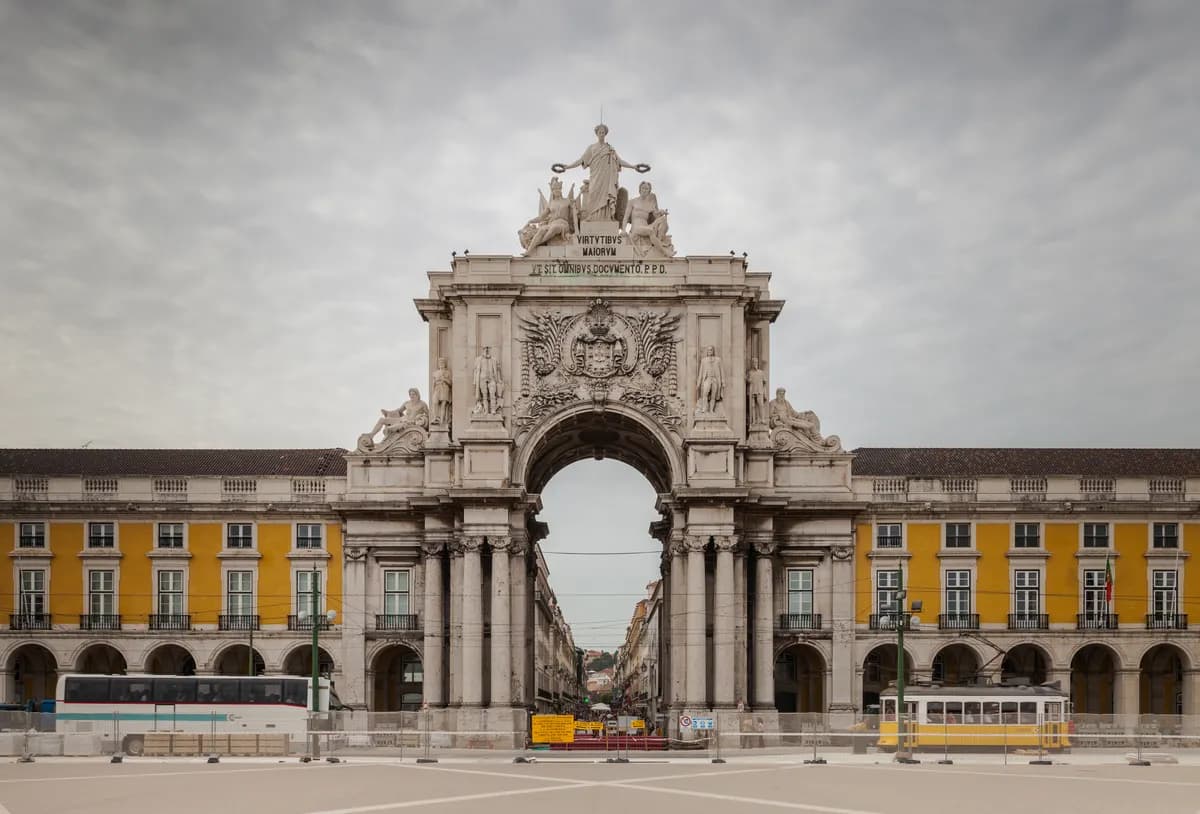
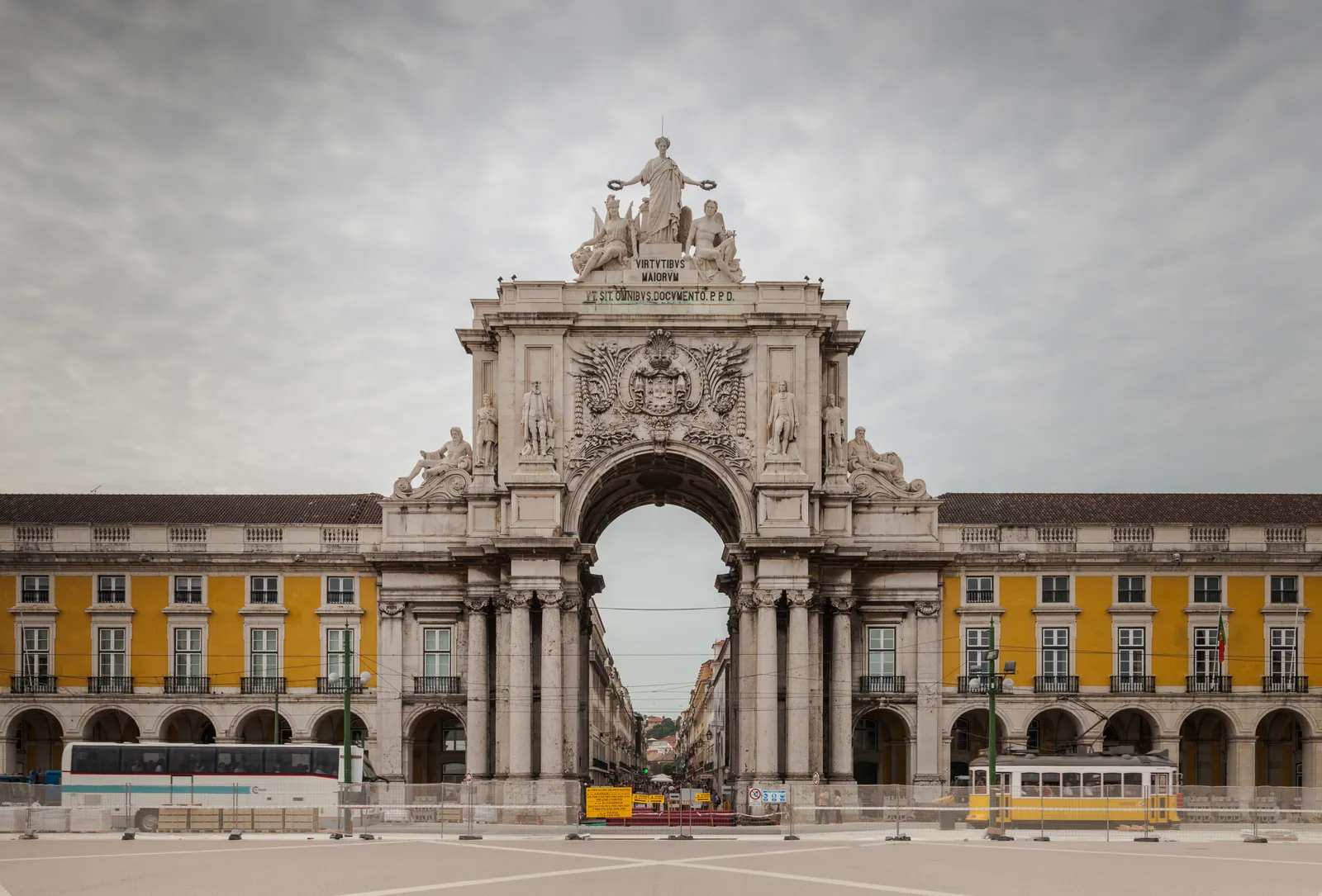
Praça do Comércio (Commerce Square). Photo: Diego Delso, CC BY-SA 3.0, via Wikimedia Commons
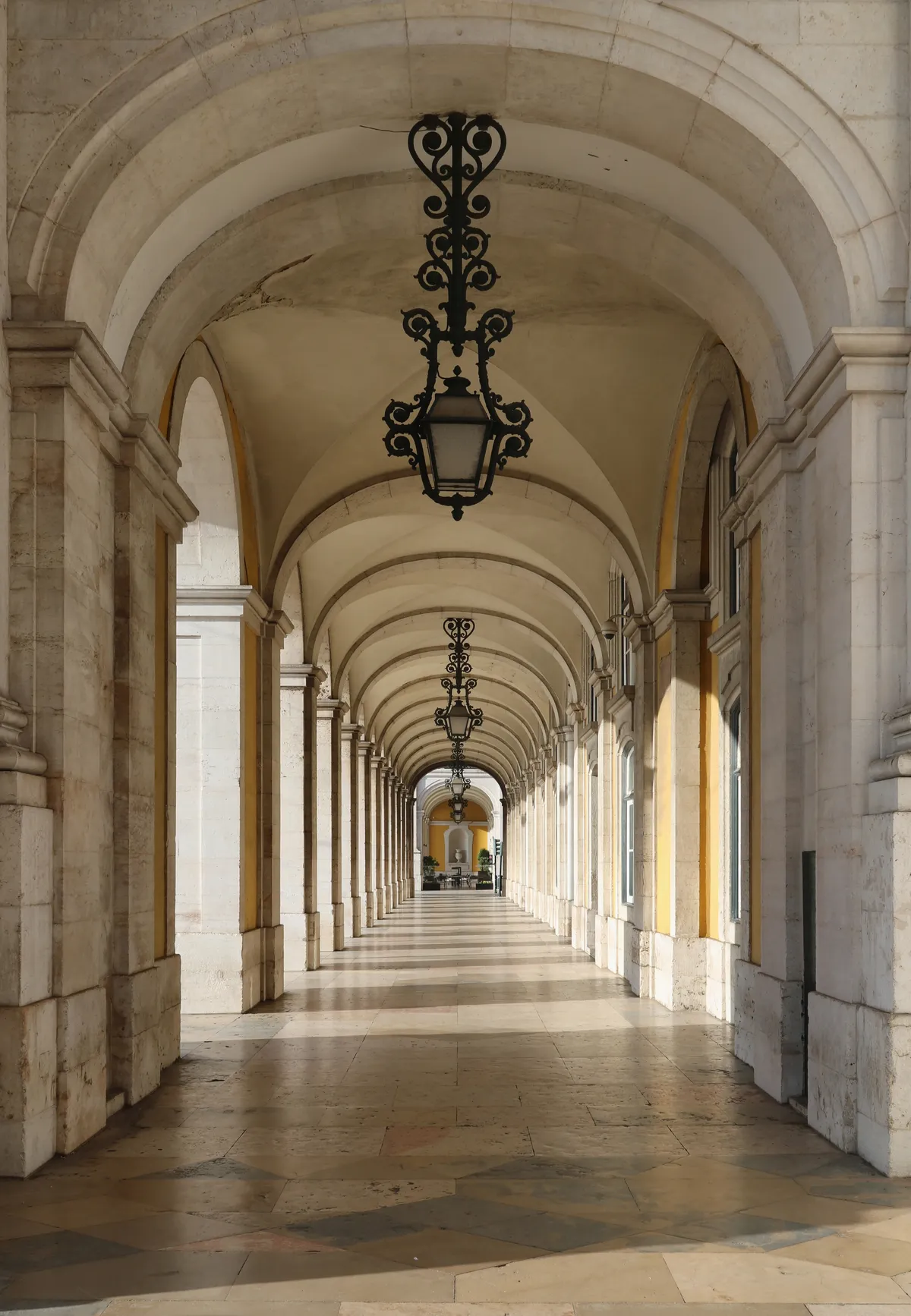
Praça do Comércio (Commerce Square). Photo: Ingo Mehling, CC BY-SA 4.0, via Wikimedia Commons
Tips for Cruise PassengersEssential Info
Flat, step-free riverside walk of about 1 km from the terminal. The square itself is level, though parts are cobbled.
Time from port: 45–60 minutes round trip: about 14 minutes' walk each way plus 20–30 minutes in the square (add 30–45 minutes if you go up the arch)
From the terminal, walk west along Avenida Infante Dom Henrique with the river on your left; it is about 1 km and around 14 minutes, with no hills.
Arrive before 10:00 if you want photos of the square and Cais das Colunas without tour groups in the frame.
The Arco da Rua Augusta rooftop opens at 10:00 and costs €5 (free with Lisboa Card, free for children up to 5); last entry is 18:30.
Terreiro do Paço metro (Blue Line) is on the east side of the square: one stop back to Santa Apolónia, near the terminal, if your legs are tired.
Trams 15E and 25E stop on the square; 15E heads west along the river towards Belém.
For a quick coffee, try the counter at Martinho da Arcada (trading since 1782); counter service is usually cheaper than a terrace table under the arcades.
Treat unsolicited offers of sunglasses, 'hashish' or tuk-tuk tours in the square as sales pitches; a firm 'no, obrigado' is enough.
Allow 15 to 20 minutes for the walk back and aim to leave the square at least 45 minutes before all-aboard.
What Makes This Special
- starFree and open at all hours; no ticket needed
- starAbout 1 km from the cruise terminal along a flat riverside road (around 14 minutes on foot)
- starCais das Colunas: marble steps down to the river, the classic photo spot
- starArco da Rua Augusta on the north side, with a rooftop terrace (€5, free with Lisboa Card)
- starBronze equestrian statue of King José I (1775) by Joaquim Machado de Castro
- starMartinho da Arcada café, trading under the arcades since 1782
- starTerreiro do Paço metro station (Blue Line) and tram stops for 15E and 25E
- starSite of the 1908 assassination of King Carlos I and his heir
- starStart of Rua Augusta, the pedestrian street into the Baixa grid
Getting There
Address
Praça do Comércio, Lisbon
From Cruise Port
About 1 km west of the terminal, around 14 minutes on flat ground along the riverside road. The closest of Lisbon's grand landmarks to the ship.
Nearby Attractions
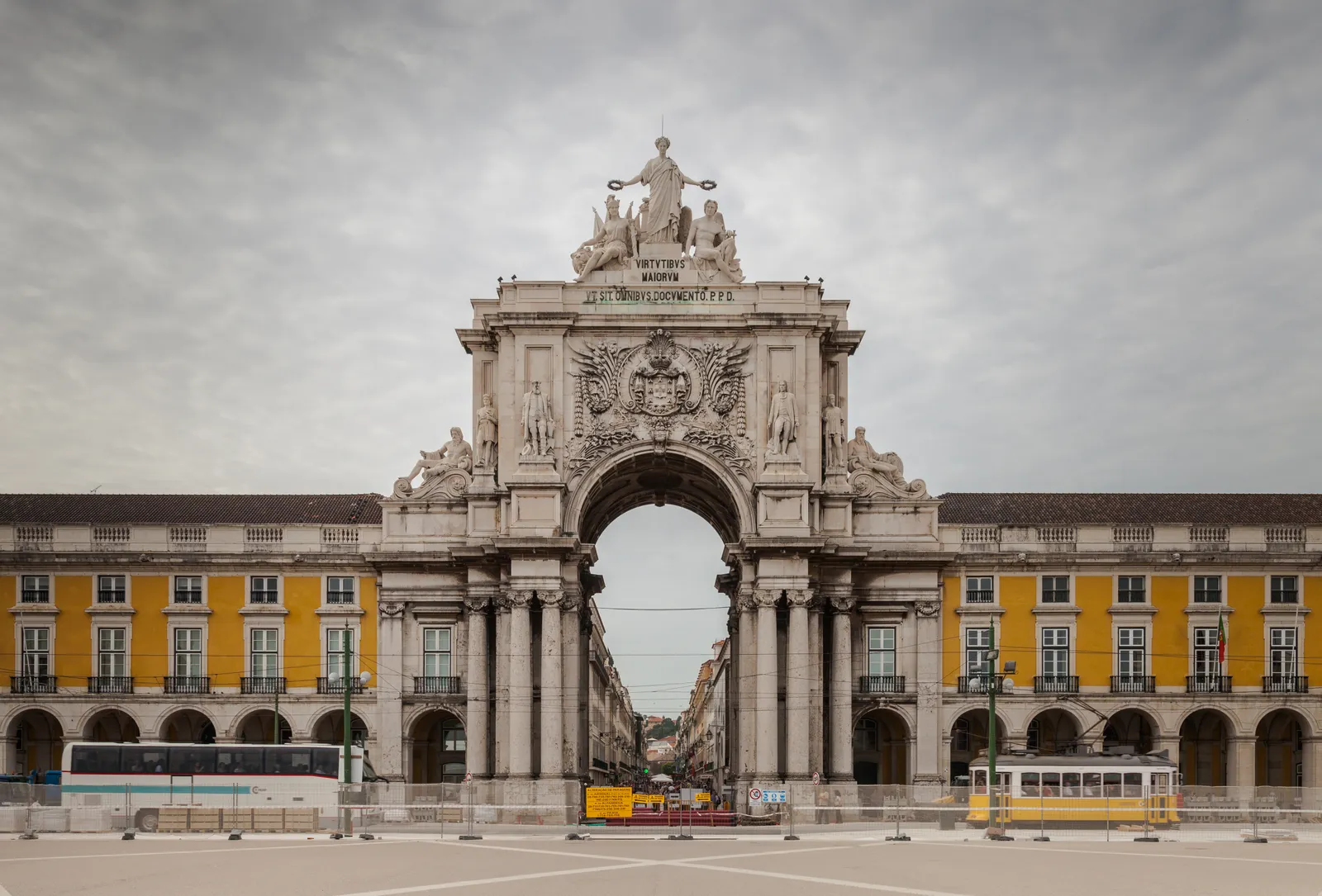
Arco da Rua Augusta
A lift and a short stair climb to a rooftop terrace over Praça do Comércio, 14 minutes' walk from the ship
Rua Augusta
The Baixa's main pedestrian street, entered through the arch on Praça do Comércio, under 20 minutes' walk from the ship.
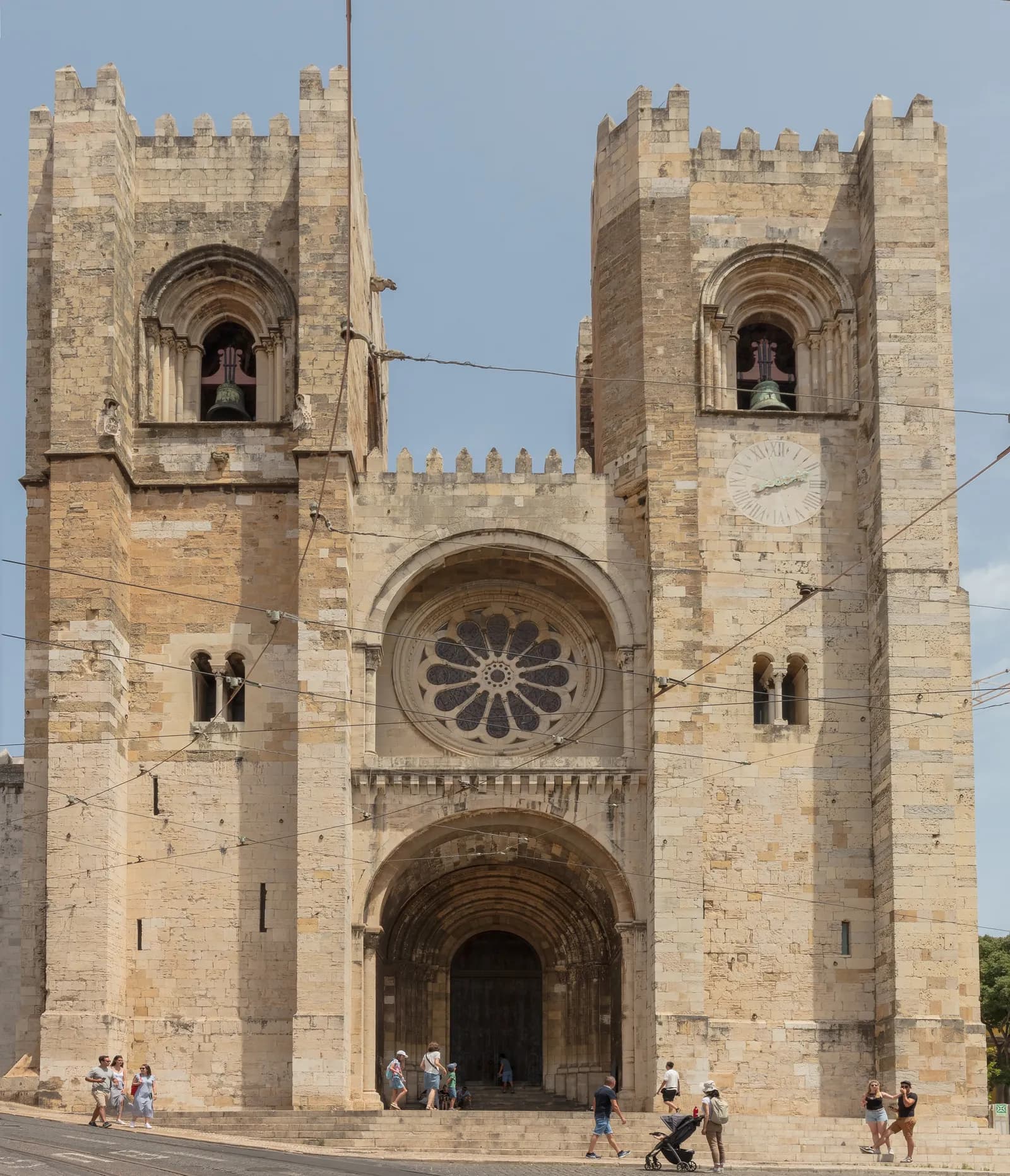
Sé de Lisboa (Lisbon Cathedral)
Lisbon's 12th-century cathedral, a short uphill walk from the ship
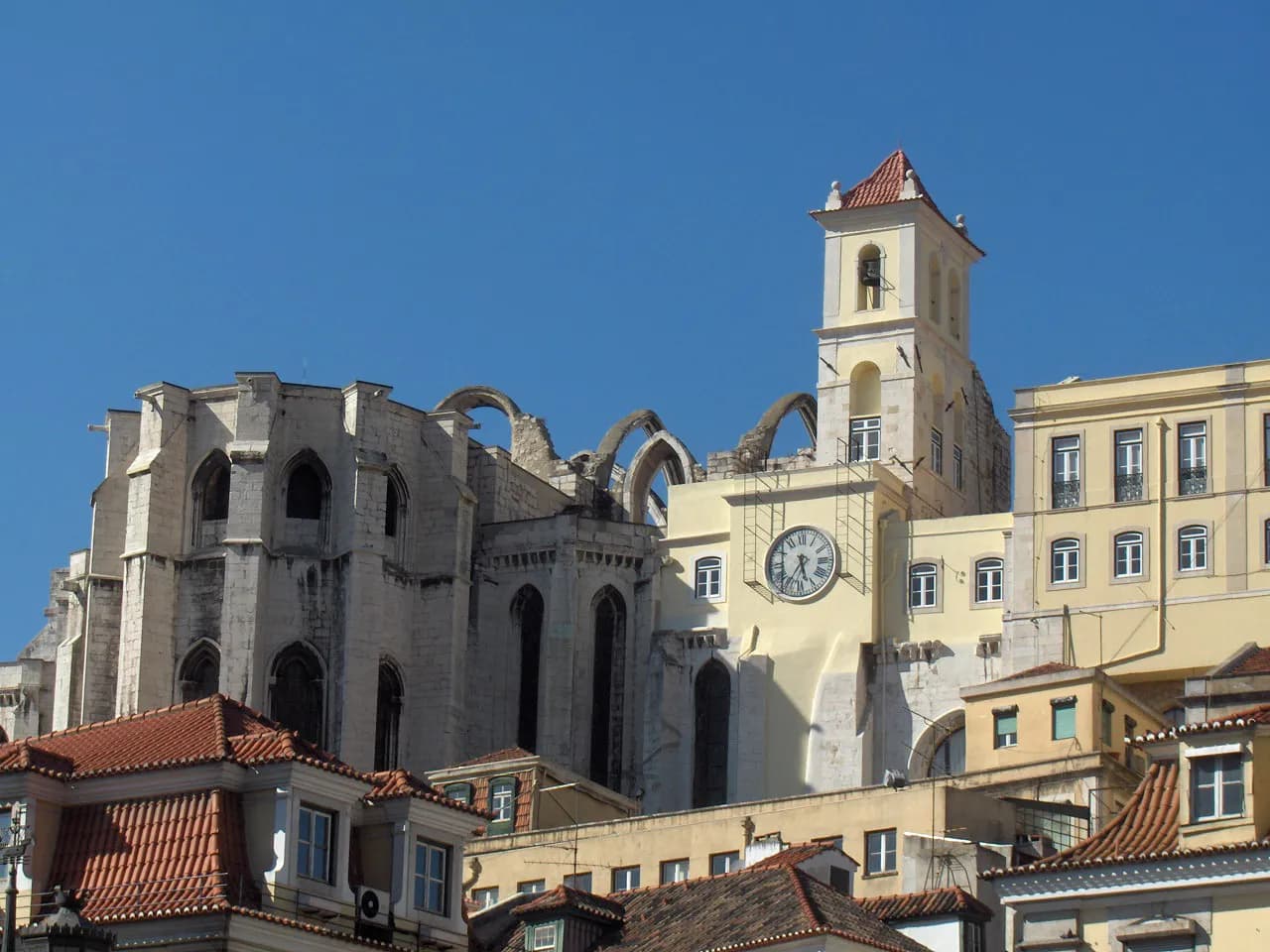
Convento do Carmo and Archaeological Museum
The roofless Gothic church left standing after the 1755 earthquake, now a small archaeology museum in Chiado