Cascais and Estoril on a Cruise Port Day: Is It Worth It?
The short answer: Cascais works on a port call of 6 hours or more, using the train, with no pre-booking. It is the most forgiving day trip from the cruise terminal: the train runs every 20 minutes or so, the line is flat and simple, and Cascais station sits in the middle of town, a few minutes from the beach. Compared with Sintra, there are no timed tickets, no shuttle-bus queues and no hills to climb.
What Cascais does cost you is time. Door to door, allow about 1 hour 15 minutes each way. On a 4-hour call, that leaves too little in Cascais to justify the trip. Adding Cabo da Roca on public transport is where plans usually go wrong; more on that below.
Step 1: from the ship to Cais do Sodré
Cascais trains leave from Cais do Sodré station, west of Praça do Comércio. From the cruise terminal at Jardim do Tabaco you have three ways there:
- anchorWalk (26–28 min): flat all the way along the river, past Praça do Comércio. The simplest option in good weather.
- anchorTaxi or ride-hail (about 10 min): worth it for the outbound leg if you want to catch an earlier train.
- anchorMetro: walk about 10 minutes east to Santa Apolónia, take the Blue Line to Baixa-Chiado and change to the Green Line for Cais do Sodré. It works, but with the change it is barely faster than walking.
Buy a reusable Navegante card (€0.50) at a metro or train station machine. Each traveller needs their own card. Loading "Zapping" credit on it lets you pay the train fare at the barrier and skip the ticket queue at Cais do Sodré, which can be long on summer mornings.
Step 2: the Cascais train
Sit on the left heading out (the river side). The line runs along the Tagus past Belém and then the open coast, and the second half of the ride is one of the best cheap views in the region. Trains stop at Belém on the way, which is handy if you want to combine Cascais with a quick look at the Belém Tower on the return.
The line is being modernised in 2026. According to Infraestruturas de Portugal, the closures between Caxias and Cascais are at night and early on Sunday mornings (05:30–08:40), with replacement buses. Daytime trains are not affected, but check the CP website the day before in case of changes.
| Detail | What to expect |
|---|---|
| Line | CP Linha de Cascais, Cais do Sodré to Cascais (terminus) |
| Journey time | About 33–40 minutes, depending on the stopping pattern |
| Frequency | Roughly every 20 minutes during the day, more often at weekday peaks |
| Fare (2026) | €2.55 single, adult; a four-zone fare on CP's January 2026 price list |
| Payment | Loaded onto a Navegante card; a Zapping balance is slightly cheaper |
| Pre-booking | Not possible or needed: it is a commuter line |
What to do with 2–4 hours in Cascais
Cascais is a former fishing town turned seaside resort, and the pleasure of it is mostly outdoors. With a couple of hours:
- anchorThe town beaches: Praia da Ribeira, Praia da Rainha and Praia da Conceição are all within a few minutes of the station. They are small, sheltered and busy in summer. The Atlantic here is cold even in August; paddling is more common than long swims.
- anchorThe old town and marina: whitewashed lanes and wave-patterned cobbles, the fishing harbour, the marina and the Cidadela fortress on the waterfront.
- anchorBoca do Inferno: a sea arch and chasm in the cliffs about 2 km west of the centre, roughly 20 minutes on foot along a flat coastal road past the Castro Guimarães museum. It is at its most dramatic with a swell running. Stay behind the railings; people have been swept off these rocks.
- anchorLunch: grilled fish near the harbour is the obvious choice. Prices in the centre are resort-level; a street back from the seafront is usually better value.
Estoril: stop one station early?
Estoril is the station before Monte Estoril and Cascais. It has the Tamariz beach right by the station, the casino gardens, and the start of the seafront promenade to Cascais. The best way to see both on a port day is to get off at Estoril, walk the promenade west to Cascais along the sea wall (allow 30–40 minutes at an easy pace), and take the train back from Cascais, where you are sure of a seat at the terminus.
On its own, Estoril is quieter and less interesting than Cascais. It is a pleasant walk, not a destination.
Adding Cabo da Roca: why it is risky
Cabo da Roca, the westernmost point of mainland Europe, is about 13 km north-west of Cascais, and every private driver on the quay sells "Cascais and Cabo da Roca" as a package. By public transport it is a different proposition.
The Carris Metropolitana bus 1624 runs from the Cascais bus terminal to Cabo da Roca (and on to Sintra). The published timetable shows departures roughly twice an hour through the day, and the ride takes around half an hour on winding roads. Then you need the bus back, which means waiting for a specific departure at an exposed headland, then the train, then the walk to the ship.
Add it up: Cabo da Roca on public transport adds 2 to 2.5 hours to the Cascais trip, and every leg depends on the one before it. A missed bus back costs half an hour you may not have. On a call under 9 hours, we would not attempt it by bus. With a taxi or private driver it becomes reasonable on an 8-hour call, as long as you agree the price and the return time before you set off.
How many port hours do you need?
The arithmetic behind that: about 1 hour 15 minutes each way (walk or taxi to Cais do Sodré, wait for a train, 35–40 minutes on board, then back), plus being at the terminal an hour before all-aboard and a 30-minute buffer. On a 6-hour call, that leaves roughly two and a half hours in Cascais.
Plan the return backwards from all-aboard: pick the train you intend to catch, and the one before it. If a train is cancelled, the next is typically 20 minutes behind, and a taxi from Cascais to the terminal is the fallback. Road traffic on the coast road can be heavy on summer afternoons.
| Time in port | Cascais verdict |
|---|---|
| Under 5 hours | No. Transit would eat more than half your day. Stay in Lisbon. |
| 5–6 hours | Possible but tight: about 1.5 hours in Cascais. Only if the beach matters more than Lisbon. |
| 6–8 hours | Yes: 2.5–4 hours in Cascais, including Boca do Inferno and lunch. |
| 8+ hours | Yes, with room for Estoril or a driven detour to Cabo da Roca. |
Is Cascais the best use of your day?
For a first visit to Lisbon, usually not. The old town, the viewpoints and Belém are all closer, and a Lisbon port day is short. Cascais makes most sense when you have seen Lisbon before, when you want a beach and sea air rather than monuments, or on a hot summer day when a sea breeze and a beach beat climbing the city's hills.
If you are undecided, build the day in our planner, or compare it with the options in our 4, 6 or 8 hour itineraries. If the forecast is bad, Cascais loses most of its appeal; our rainy day guide has better options.
Attractions mentioned in this guide
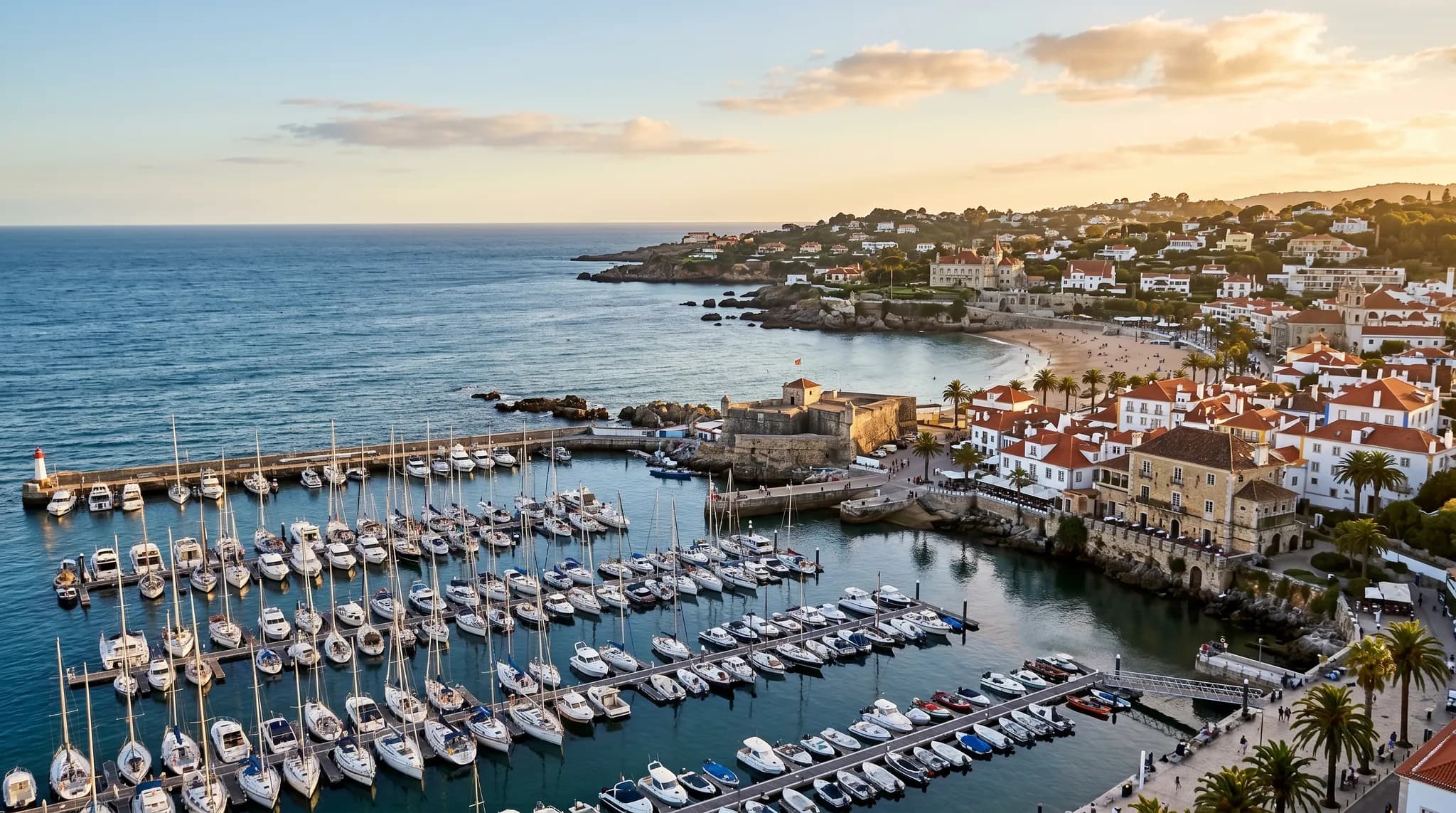
Cascais
Charming Portuguese Riviera beach town just 30 minutes from Lisbon cruise port

Cabo da Roca
Europe's westernmost point - where land meets the Atlantic in dramatic fashion
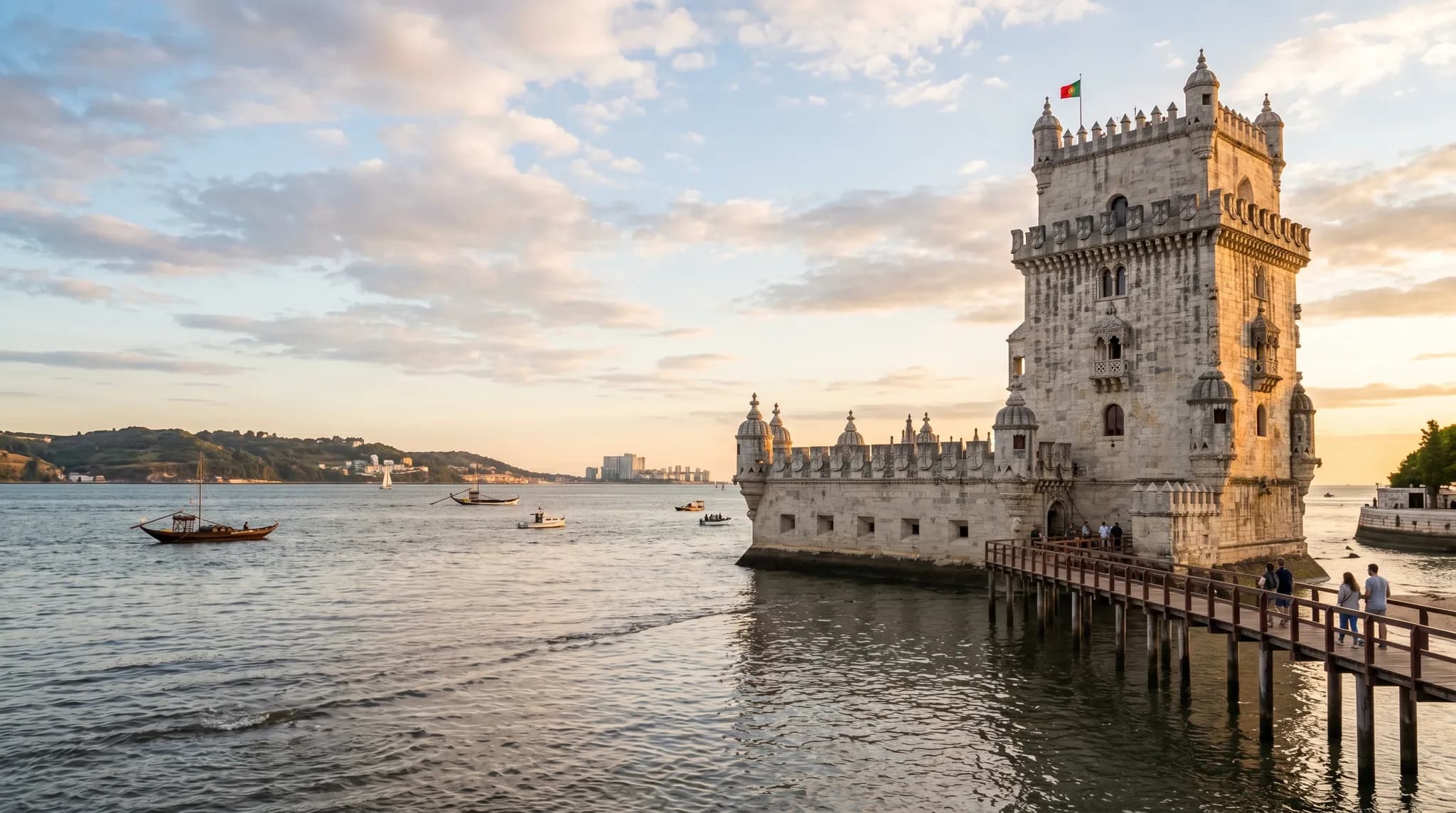
Torre de Belém (Belém Tower)
Reopened in May 2026 with timed half-hour slots; the carved exterior is free, the interior is tight

Mosteiro dos Jerónimos (Jerónimos Monastery)
Free church with Vasco da Gama's tomb, paid cloister on timed slots; closed on Mondays