Day Trips from Lisbon on a Cruise Call: Which Are Realistic?
The short answer: on a normal port call of 8–10 hours, only Sintra, Cascais and, at a push, Óbidos or Setúbal work independently. Nazaré, Fátima, Batalha, Alcobaça and Évora are each 1.5–2 hours away by road before you have seen anything. Do them on your own and most of your day is spent in transit, with a ship that will not wait at the end of it.
That does not make them bad trips. It makes them trips for the right circumstances: a ship excursion, a long call, or a night in Lisbon before or after the cruise. Below are the numbers for each, from the Jardim do Tabaco cruise terminal.
The rule behind every verdict
Work backwards from all-aboard. Be at the terminal at least an hour before it, and keep a 30–60 minute buffer for a late train or traffic. On a 9-hour call that leaves about 7 usable hours. A trip needing 4 hours of travel leaves 3 on the ground.
Getting to the departure points also costs time. From the terminal, Sete Rios bus station is roughly 30 minutes by metro, Campo Grande 35 minutes, and Oriente or Roma-Areeiro stations 20–35 minutes.
Sintra and Cascais: the two that work
These are the classic day trips, and both have their own detailed guides. Sintra needs about 9 hours in port, pre-booked palace tickets and the discipline to see one palace, not three; see Is Sintra doable on a cruise stop?. Cascais is the easiest trip: one walk and one train, no bookings, workable from about 6 hours; see Cascais and Estoril on a port day.
Cabo da Roca belongs with them. By bus from Cascais it adds 2 hours or more and depends on connections. With a taxi or private driver it fits an 8-hour call.
Óbidos: the one far trip that can work alone
Óbidos is a walled medieval town about 87 km north of the terminal. You walk the main street, Rua Direita, and the town walls, and drink ginjinha (sour cherry liqueur) from a chocolate cup. Two hours covers it.
By public transport, the Rodoviária do Oeste Rápida Verde express bus runs from Campo Grande in Lisbon to Óbidos in about an hour, at intervals of 30–60 minutes through the day. Tickets are sold on board, at company ticket offices or in the MOOV-U app. If you plan to pay on board, carry some cash. The operator announced timetable changes from 6 October 2026, so check the current times on its website before you sail.
Door to door that is about 1 hour 45 minutes each way. By taxi or private car, about 1 hour 10 minutes on the A8 motorway.
Verdict: workable on a call of 9 hours or more if you leave the ship early and accept about 2.5 hours in Óbidos. Under 8 hours, no. On summer weekends and during its festivals the town gets very crowded, which slows everything.
Nazaré: the big waves are seasonal
Nazaré is a fishing town and beach about 124 km north. Most visitors come for the view from the Sítio clifftop, reached by funicular, and for the record-breaking winter waves off the Praia do Norte. Those giant swells are a winter phenomenon and depend on the forecast; on most cruise-season days the sea is ordinary.
Rede Expressos coaches from Sete Rios take about 1 hour 45 minutes to 2 hours, and departures are roughly two hours apart, not every half hour. Door to door, allow 2.5 hours each way. By car, about 1.5 hours.
Verdict: not realistic independently on a port call. On a 10-hour call you would get about 2 hours there, held hostage to a coach timetable. Take it as part of a tour or a ship excursion.
Fátima, Batalha and Alcobaça
Fátima is one of the largest Catholic shrines in Europe, about 127 km from the terminal. The Sanctuary is open to all, and entry to the esplanade and basilicas is free. If you are not going for religious reasons, it is a long way for a large, plain complex. Rede Expressos coaches from Sete Rios take about 1.5 hours.
Batalha monastery is a UNESCO World Heritage Site and one of the finest Gothic buildings in Portugal, about 145 km by road. Coaches from Sete Rios take about 2 hours. The monastery was closed for some weeks in early 2026 and reopened in the spring, so check its official page close to your date.
Alcobaça monastery, also UNESCO-listed, is about 123 km away and holds the tombs of King Pedro I and Inês de Castro. Some Rápida Verde buses from Lisbon continue there, but it is a long ride.
Verdict: none of these three is realistic on your own on a port day. Each needs 4 hours or more of travel there and back, and they are far apart from each other by public transport.
The combined coach tours
Lisbon tour operators sell a classic loop: Fátima, Batalha, Nazaré and Óbidos, sometimes with Alcobaça. These are typically sold as 9–10 hour days, with an 08:30 or similar pick-up from Lisbon hotels. Time at each stop is usually 40 minutes to 1.5 hours.
Do the arithmetic against your ship. A 10-hour tour on a 10-hour call leaves no margin at all, and a coach stuck in traffic on the A1 or A8 on the way back is your problem, not the operator's. Independent operators do not guarantee your return before all-aboard.
If you want this route on a port day, the ship's own version is the only one with a safety net. Expect a shortened loop, often two or three of the stops, not four.
Évora: a train timetable decides it
Évora, the walled capital of the Alentejo and a UNESCO World Heritage city, is about 137 km east, roughly 1.5 hours by car. On the ground you get the Roman temple, the cathedral, Praça do Giraldo and the Chapel of Bones (Capela dos Ossos), which is open every day: 09:00–18:30 from June to September and 09:00–17:00 from October to May, according to the city council.
By rail, CP Intercidades trains leave Lisboa Oriente (also stopping at Entrecampos and Sete Rios) and take about 1 hour 45 minutes. The timetable valid from 6 September 2026 shows few trains. Morning departures from Oriente are at 07:02, 09:02 and 09:58, and trains back leave Évora at 07:00, 09:14, 11:30, 16:51 and 19:14; some run on weekdays only. Note the gap between 11:30 and 16:51. Seat reservation is compulsory. Rede Expressos also runs coaches from Sete Rios.
Verdict: not realistic by train on a port day. The 09:58 out and the 16:51 back gives you about 5 hours in Évora, but puts you back at Oriente at 18:36, too late for nearly every ship. By car or tour, possible on a call of 10 hours or more. Otherwise, save it for a night in Lisbon.
Setúbal and Arrábida: close, but the beaches are not easy
Setúbal sits on the Sado estuary about 57 km south, across the 25 de Abril bridge. Fertagus trains from Roma-Areeiro take about an hour to Setúbal and run every 20 minutes or so on weekdays. The town itself is a working port with a good fish market and grilled fish restaurants, not a monument destination.
The Arrábida hills and their beaches (Figueirinha, Galapos, Creiro) are the real draw, and the hardest part. In the 2026 bathing season, from 4 June to 15 September, Setúbal council restricted cars and parking on the coastal road under its "Arrábida Sem Carros" plan, partly because of damage from the early-2026 storms. Access was by Carris Metropolitana beach buses, such as line 4474 from Setúbal to Figueirinha. Outside the season, beach bus services drop to weekends or stop, so check the Carris Metropolitana timetables for your date.
By car or private tour, the coastal road and the viewpoints fit a half-day loop, about an hour each way.
Verdict: Setúbal town by train works on a call of 7 hours or more. An Arrábida beach day by public transport needs 9 hours or more in season and is not worth trying out of season. With a driver it is a reasonable 6–7 hour outing.
Comparison at a glance
| Destination | Road distance | Public transport, door to door | By car or tour | Minimum port hours, independently | Verdict |
|---|---|---|---|---|---|
| Sintra | About 30 km | About 1.5 h to the town by train | 40–60 min | 9 | Yes, disciplined |
| Cascais | About 30 km | About 1 h 15 min by train | 40 min | 6 | Yes |
| Óbidos | 87 km | About 1 h 45 min (Rápida Verde bus) | 1 h 10 min | 9 | Possible |
| Setúbal (town) | 57 km | About 1.5 h (Fertagus) | 50 min | 7 | Possible |
| Arrábida beaches | 63 km | 2 h or more, in season only | 1 h | 9 | Better with a driver |
| Fátima | 127 km | About 2–2.5 h (coach) | 1 h 30 min | Not advised | Excursion or overnight |
| Nazaré | 124 km | About 2.5 h (coach) | 1 h 30 min | Not advised | Excursion or overnight |
| Batalha / Alcobaça | 123–145 km | About 2.5 h (coach) | 1 h 30–1 h 45 min | Not advised | Excursion or overnight |
| Évora | 137 km | About 2.5 h (train, sparse) | 1 h 35 min | Not advised | Excursion or overnight |
Why the ship excursion is safer for the far ones
On the long-distance trips, the ship's excursion has one advantage nothing else can match: the ship waits for its own tours. If the coach is delayed on the motorway, the ship knows and holds. If an independent tour or a missed train makes you late, you are left behind, and you pay to fly or travel to the next port.
The price is fixed stops, a group pace and less time at each place. For Fátima, Batalha, Nazaré or Évora on a port day, that trade is usually worth it. For Sintra, Cascais or Óbidos on a long call, going independently is reasonable. Our guide to Lisbon tours for cruise passengers compares the options.
When these trips make sense: overnights and turnarounds
All of these trips become easy when the ship stays overnight in Lisbon, or when you start or end your cruise here.
If you are embarking in Lisbon, arrive at least a day early and do the trip before boarding day, never on it. If you are disembarking, a trip the day after works well, and some tours will pick up from your hotel. Our guide to a pre- or post-cruise night in Lisbon covers where to stay, and airport to cruise terminal covers the transfers.
For a normal call, the better plan is usually Lisbon itself. Check your hours on the cruise calendar, compare the 4, 6 and 8 hour itineraries, or build your day in the planner.
Attractions mentioned in this guide
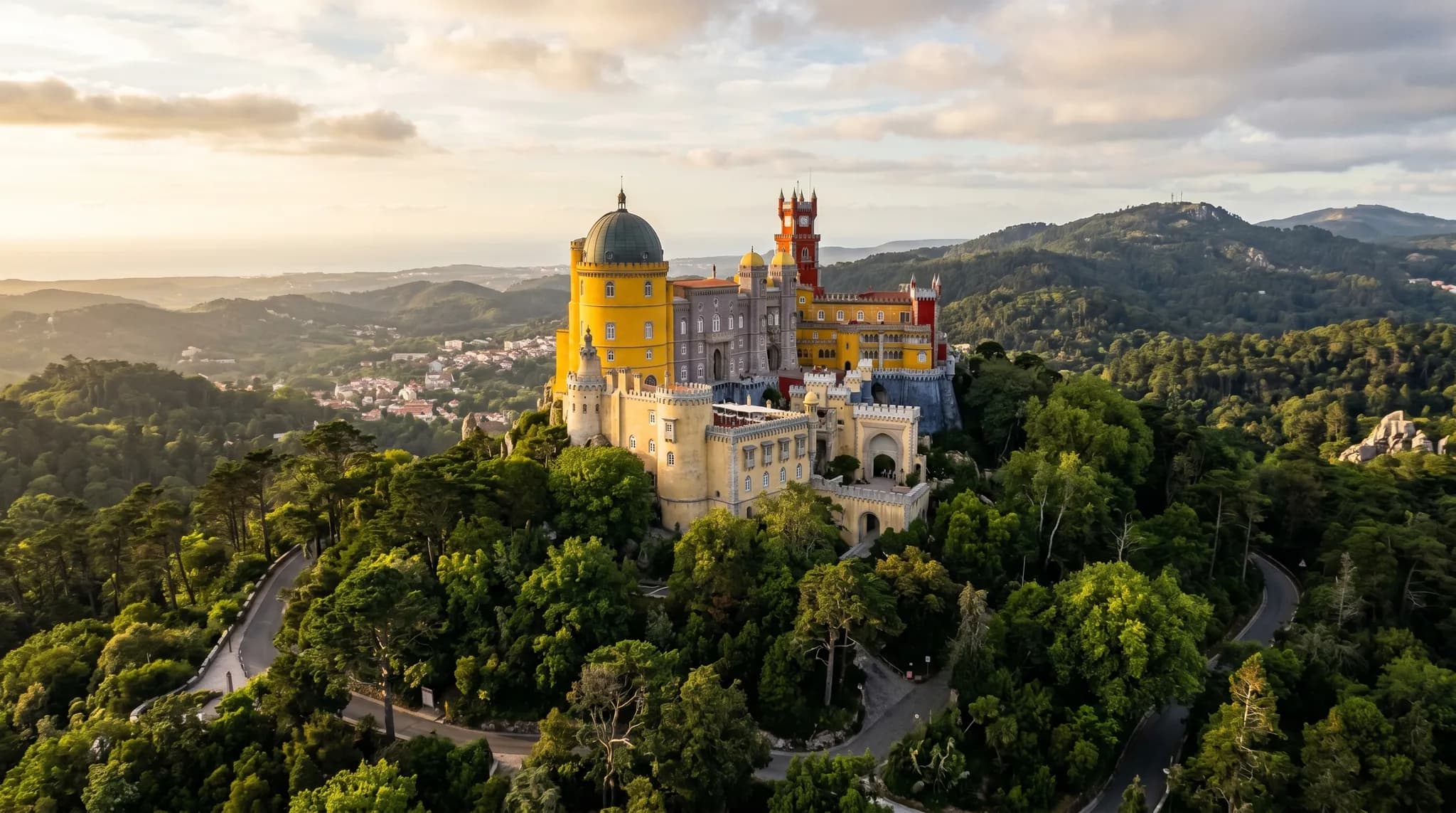
Sintra
Sintra rewards a long port call if you pick one or two sites, book ahead and keep a firm train home.
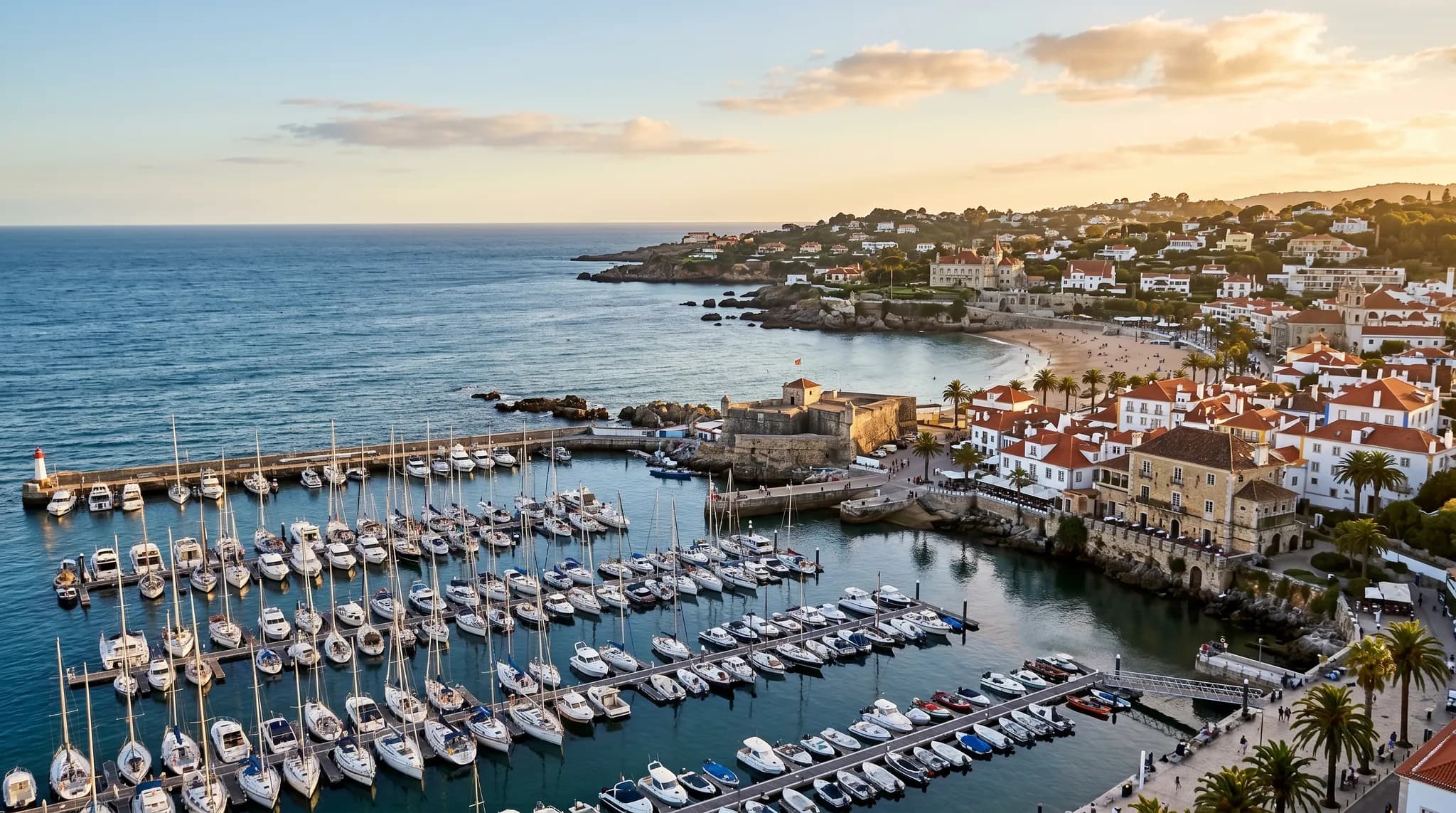
Cascais
The easiest seaside trip from the ship, but it needs about six hours ashore.
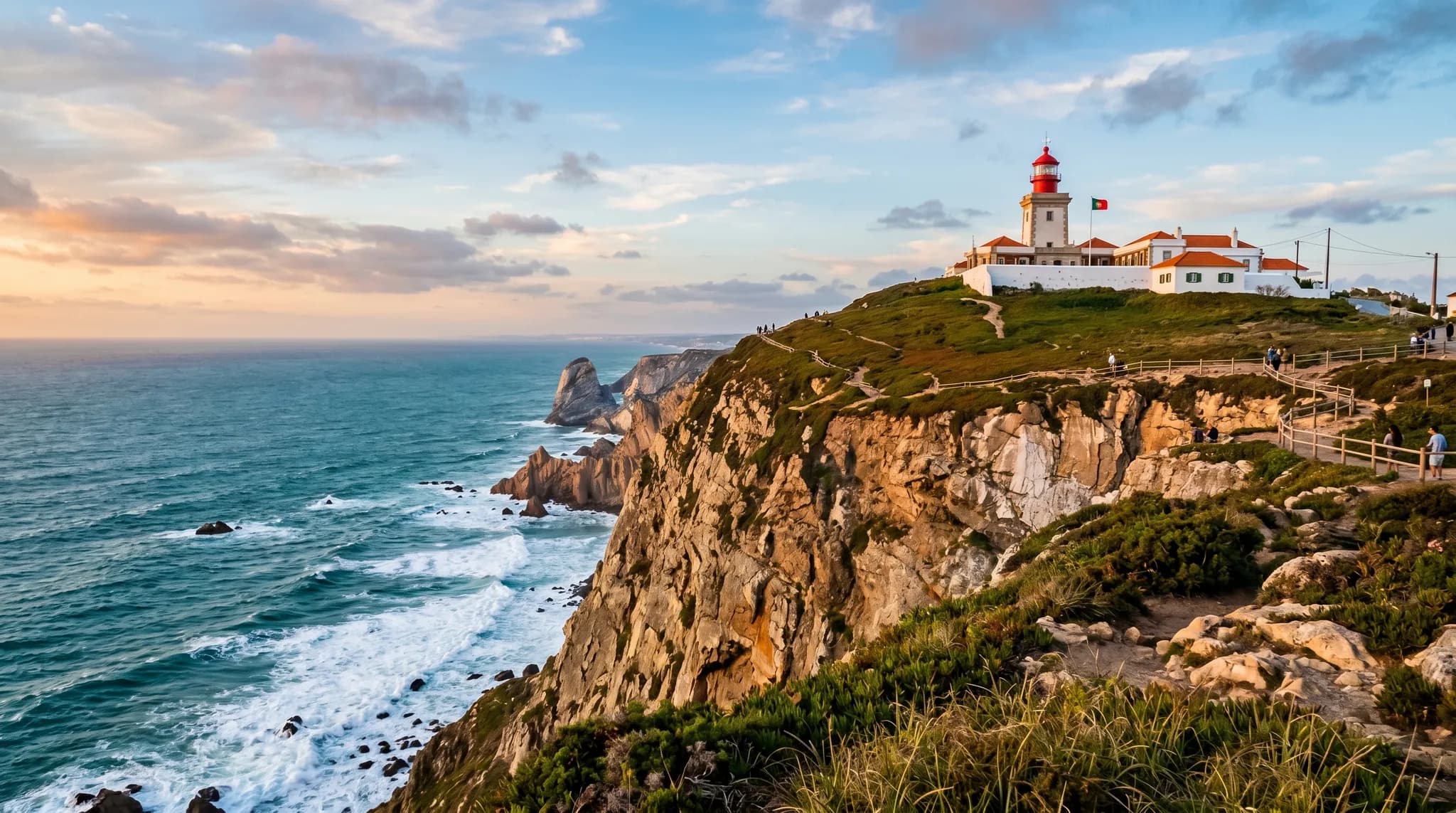
Cabo da Roca
Europe's westernmost point: reasonable by car, risky by bus on a port day.
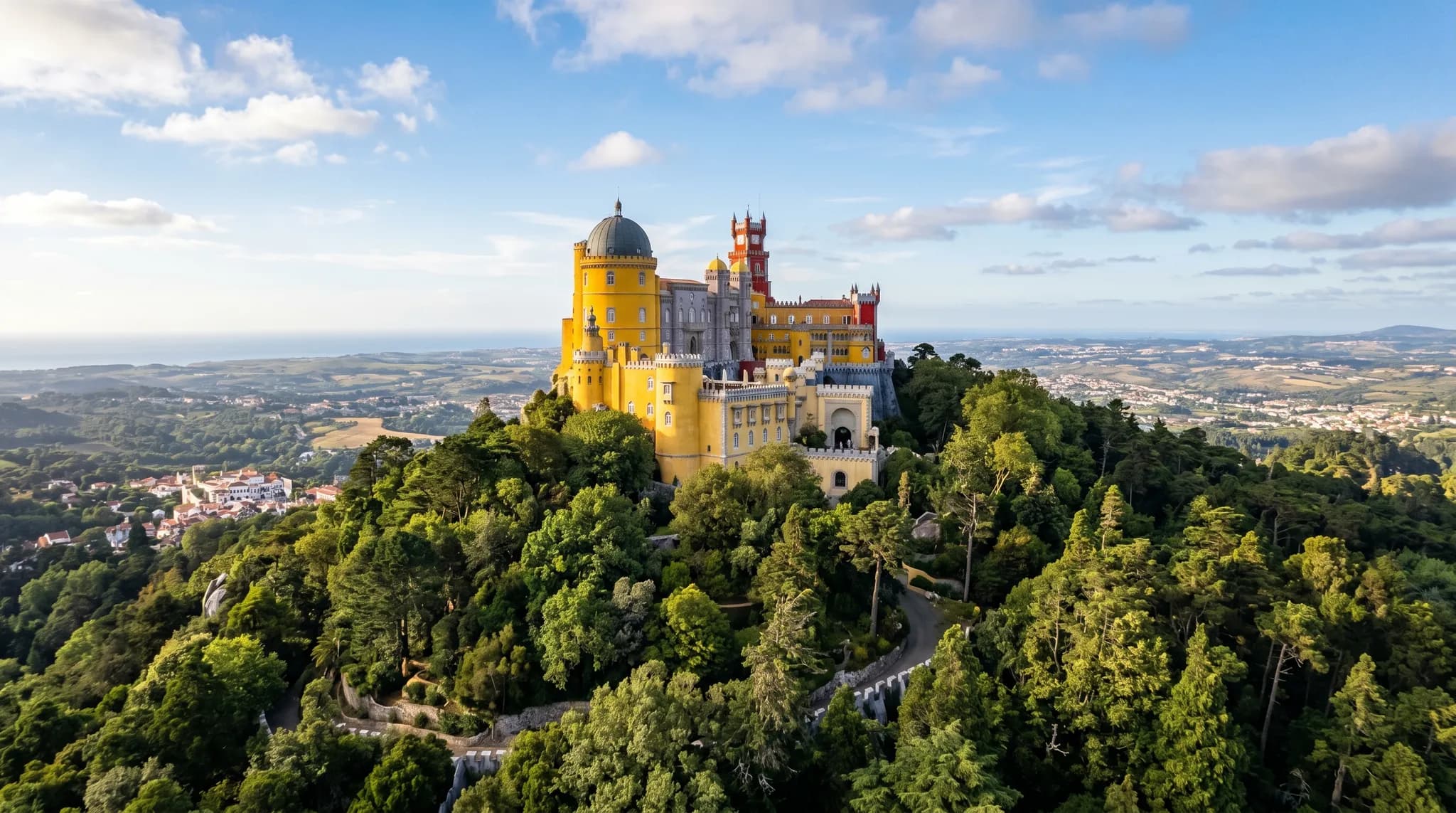
Palácio Nacional da Pena
Sintra's hilltop palace: spectacular, but only realistic on a long port call