Accessible Lisbon from the Cruise Port: Limited Mobility, Real Options
Let us be straight about the terrain: Lisbon's fame is built on seven hills, its pavements on hand-laid limestone cobbles (calçada) that are beautiful, slippery when wet, and uneven by design. Alfama, the district beside the terminal, is a medieval maze of stairs. If you imagine wheeling from the ship straight up to the castle, this is not that city.
And yet a genuinely good accessible port day exists in Lisbon, because of one geographic gift: the entire riverfront, from the cruise terminal through downtown to Belém, is flat — and the city's flagship sights cluster along exactly that ribbon. This guide builds the day around it.
Getting off the ship and along the river
The main Lisbon Cruise Terminal (Santa Apolónia / Jardim do Tabaco) is a modern, level building: step-free from gangway to street, with lifts, accessible toilets, and taxis at the door. From the terminal, a wide, level riverside route runs west to Praça do Comércio — about 1.5 km of continuous pavement, one of the easiest historic-centre approaches of any European port. Pavement quality is mostly good; the occasional calçada stretch is smoother near the kerb lines.
Praça do Comércio itself is vast, level and largely smooth, opening through the Arco da Rua Augusta into the Baixa — the flat, grid-planned downtown rebuilt after 1755. Rua Augusta and its parallel streets are pedestrianised and level: this rectangle, river to Rossio square, is the accessible heart of Lisbon, comfortably filling half a day with squares, shopfronts, cafés with terrace tables, and people-watching.
The one surface warning that matters: calçada becomes polished and slippery in rain. On a wet day, favour the smoother modern pavements and take corners slowly — locals do.
Transport that works (and the beloved options that do not)
- anchorTaxis and Uber/Bolt are the honest backbone of an accessible Lisbon day. Distances are short and fares modest. For a full wheelchair-accessible vehicle (WAV), request through the app options where available, or arrange through your ship's accessibility desk in advance — supply on the day is not guaranteed at the rank.
- anchorThe metro is largely lift-equipped, including Santa Apolónia (Blue Line) near the terminal and Baixa-Chiado — but always allow for the occasional out-of-service lift; the network posts lift status, and staff are helpful.
- anchorModern trams (15E to Belém) are low-floor with designated spaces — usable, though often crowded. Board at the start of the line (Praça da Figueira / Praça do Comércio) for the best chance of the dedicated bay.
- anchorThe historic Tram 28 is, frankly, not an accessible option: steep steps aboard century-old vehicles and dense crowds. Enjoy it from outside — the photograph of Tram 28 passing the cathedral requires no boarding. The Glória, Bica and Lavra funiculars and the Santa Justa lift would not have helped either, and all four have been closed since the Glória accident in September 2025, with no reopening date. To reach Chiado without the climb, take the metro to Baixa-Chiado and use its lifts, or take a taxi.
- anchorHop-on-hop-off buses earn their place precisely for passengers who cannot walk far: the full loop from a seated, elevated vantage covers Belém and the centre without a single kerb. Check the operator's ramp policy when boarding.
Belém: the most accessible monument zone in the city
If wheels or stamina shape your day, Belém is arguably a better use of it than the old town. The entire monument district lies on flat reclaimed riverfront: broad esplanades link the Padrão dos Descobrimentos, the gardens, and the Torre de Belém exterior, with the Mosteiro dos Jerónimos across level gardens. A taxi from the terminal takes 20–30 minutes door to door.
Inside the monuments, the picture is mixed, as medieval buildings dictate: the Jerónimos church and lower cloister level are manageable (the church nave is the masterpiece anyway), while the Torre de Belém interior is a spiral staircase and honestly not worth the struggle — its exterior and setting are the sight. The modern MAAT museum nearby is fully accessible, café included, and its wave-shaped roof promenade has ramped access to a river panorama.
The Oceanário in the Parque das Nações district — Lisbon's other flat, modern zone, east of the terminal — is another fully accessible flagship: level throughout, with lifts between exhibit levels, and consistently rated among Europe's best aquariums. Taxi, 10–15 minutes from the ship.
Viewpoints without the climb
Lisbon's postcard is the view over rooftops — usually earned by stairs. The accessible versions:
- anchorThe terminal's own rooftop terrace: lift-served, with a genuine panorama of Alfama and the river. The most underrated accessible viewpoint in the city is the one you dock at.
- anchorArco da Rua Augusta: the lift takes you most of the way up the triumphal arch (a short final stair remains — ask staff about assistance), for the axial view down the Baixa grid to the river.
- anchorMiradouro das Portas do Sol can be reached by taxi rather than the climb — the terrace itself is level once there, and the classic Alfama panorama needs no further steps. Combine with a taxi hop to the castle esplanade if the driver can drop at the gate.
- anchorBy taxi to the Parque Eduardo VII upper terrace: the formal gardens frame the city's longest sightline down to the river.
A realistic accessible day, hour by hour
- anchorMorning — Taxi to Belém at opening time: Jerónimos church, the esplanade to the tower, pastel de nata from Pastéis de Belém (staff will bring takeaway orders to a garden bench).
- anchorMidday — Taxi back to Praça do Comércio; lunch on the square's arcaded terraces or level Baixa side streets.
- anchorAfternoon — Baixa at leisure; the Arco lift for the view; then the flat riverside return toward the ship, with the option of a taxi detour to Portas do Sol for the Alfama panorama.
- anchorBuffer — You are never more than a short, flat distance or a 10-minute taxi from the gangway all day, which is precisely the design.
Total walking/wheeling in this plan: as little as 3 km, all flat, all interruptible by taxi. The terminal guide has the full transport picture, and every attraction page on this site carries its own accessibility notes.
Attractions mentioned in this guide
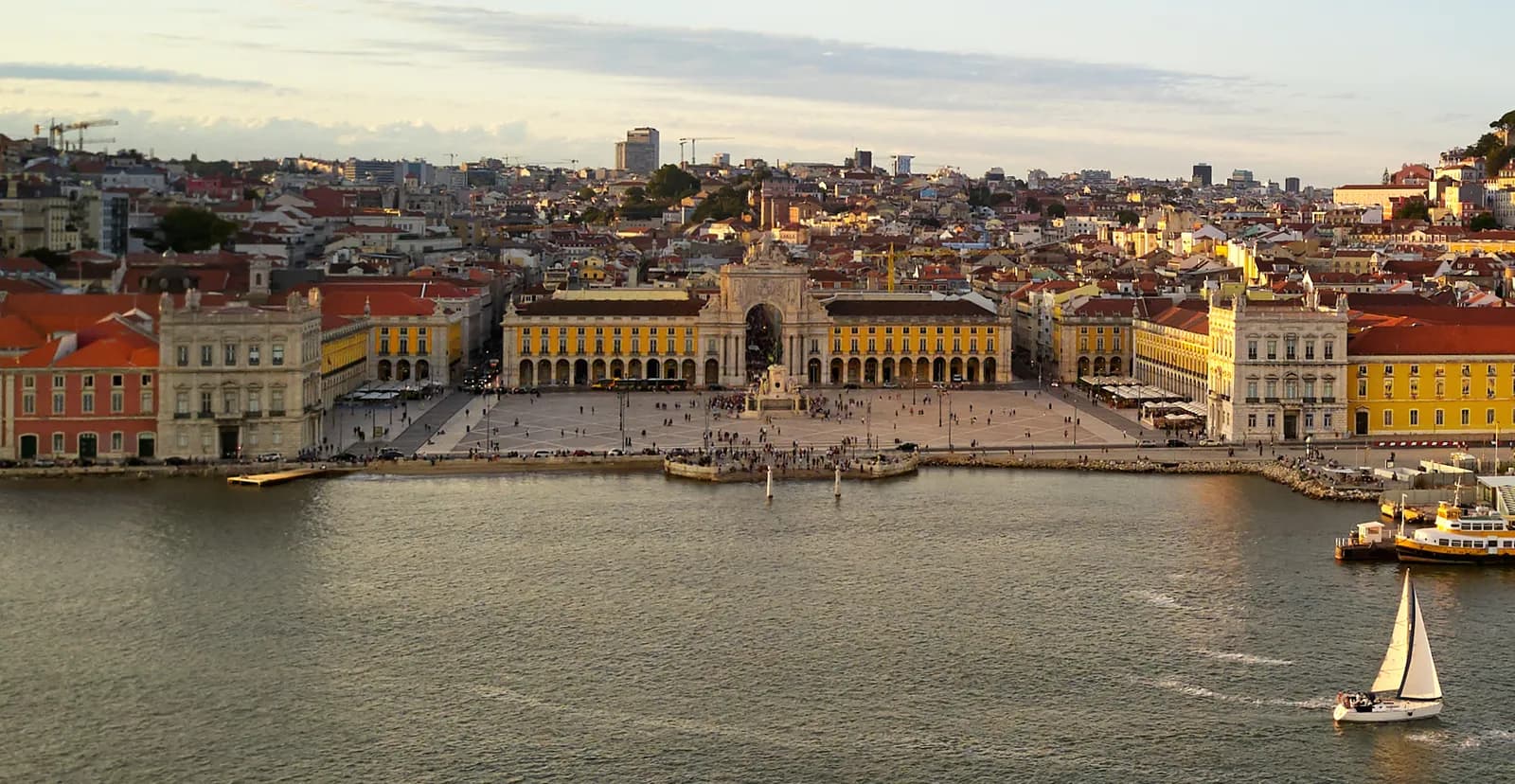
Praça do Comércio (Commerce Square)
The riverside square 14 minutes' flat walk from the cruise terminal, and the natural starting point for a port day in the Baixa
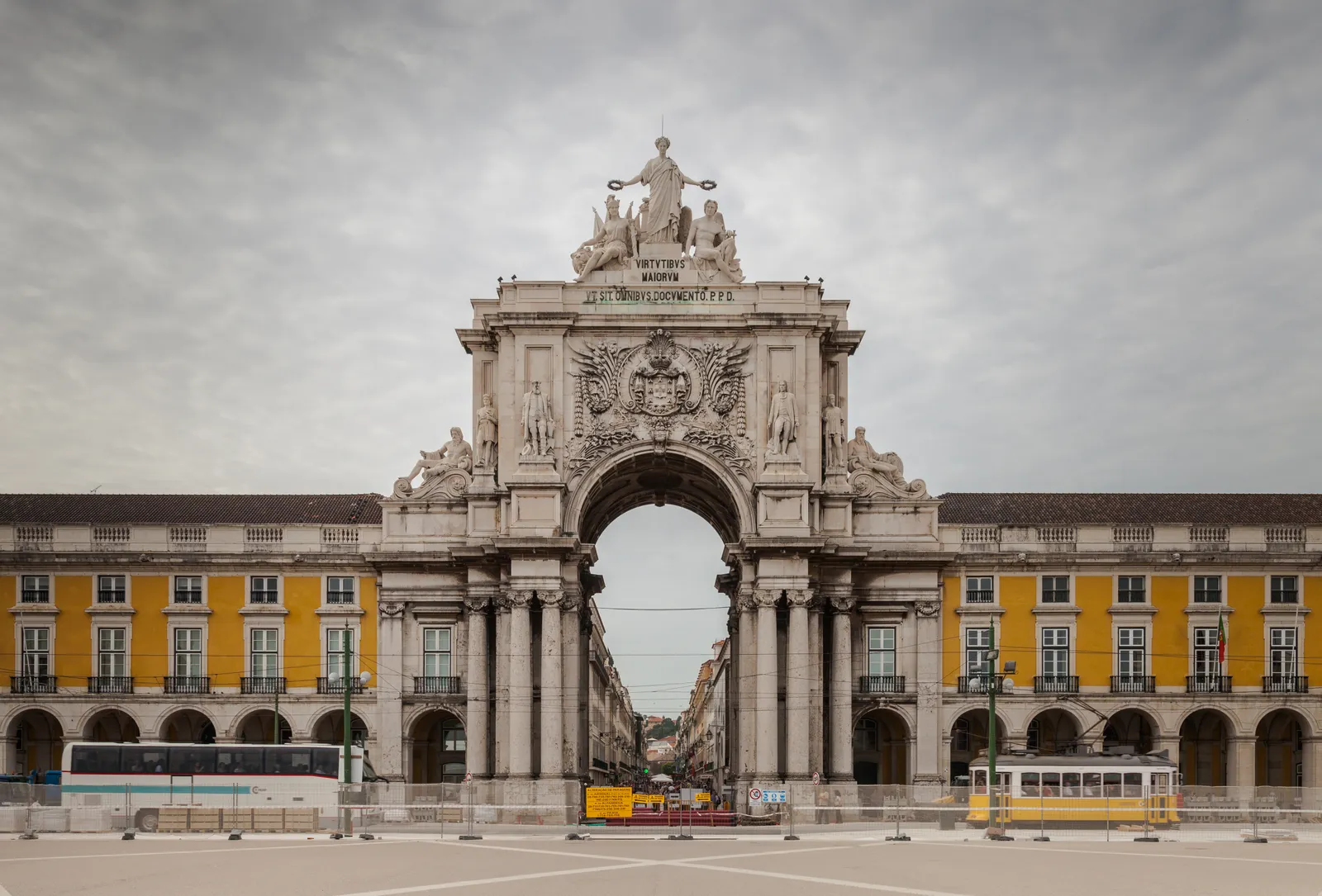
Arco da Rua Augusta
A lift and a short stair climb to a rooftop terrace over Praça do Comércio, 14 minutes' walk from the ship
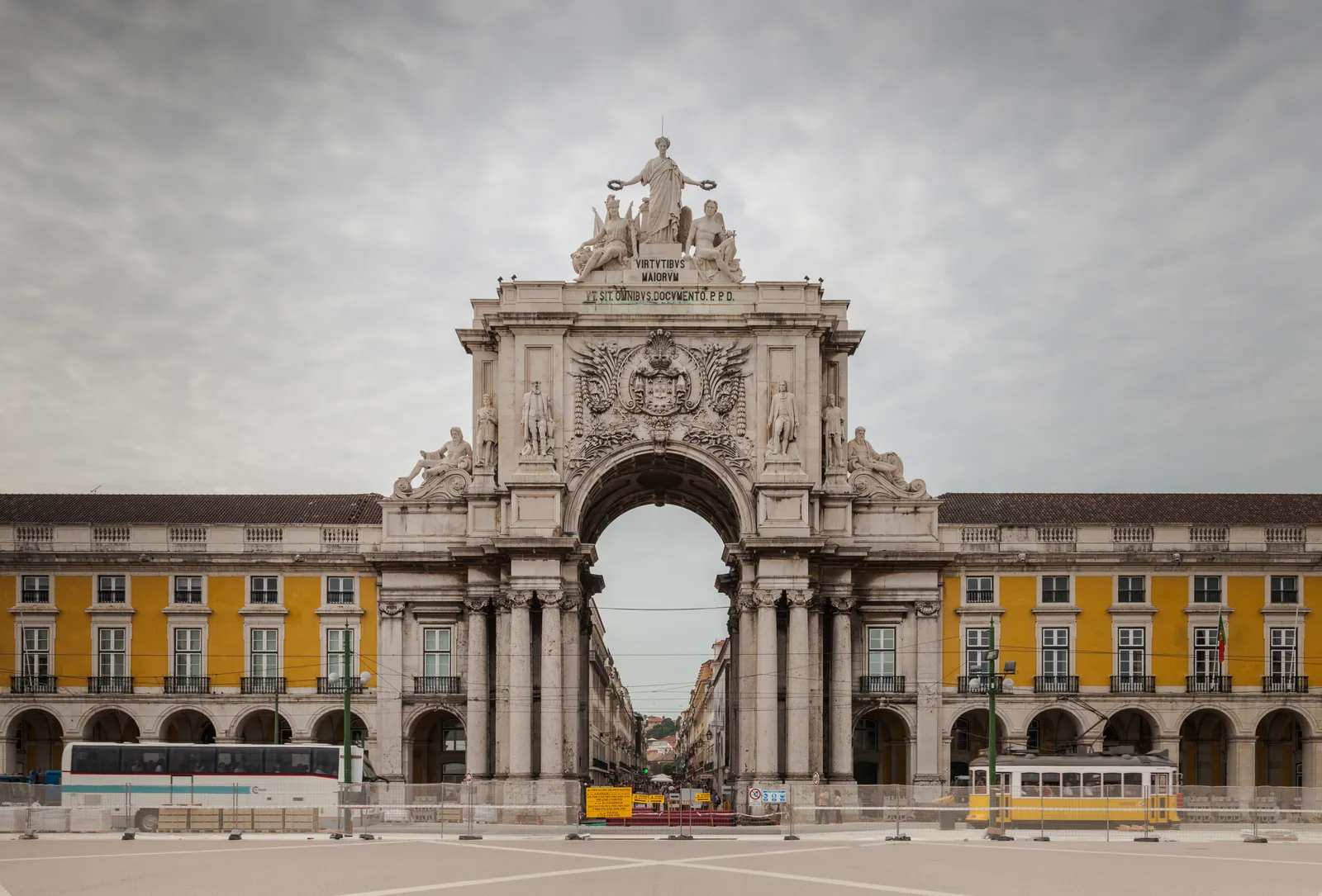
Rua Augusta
The Baixa's main pedestrian street, entered through the arch on Praça do Comércio, under 20 minutes' walk from the ship.
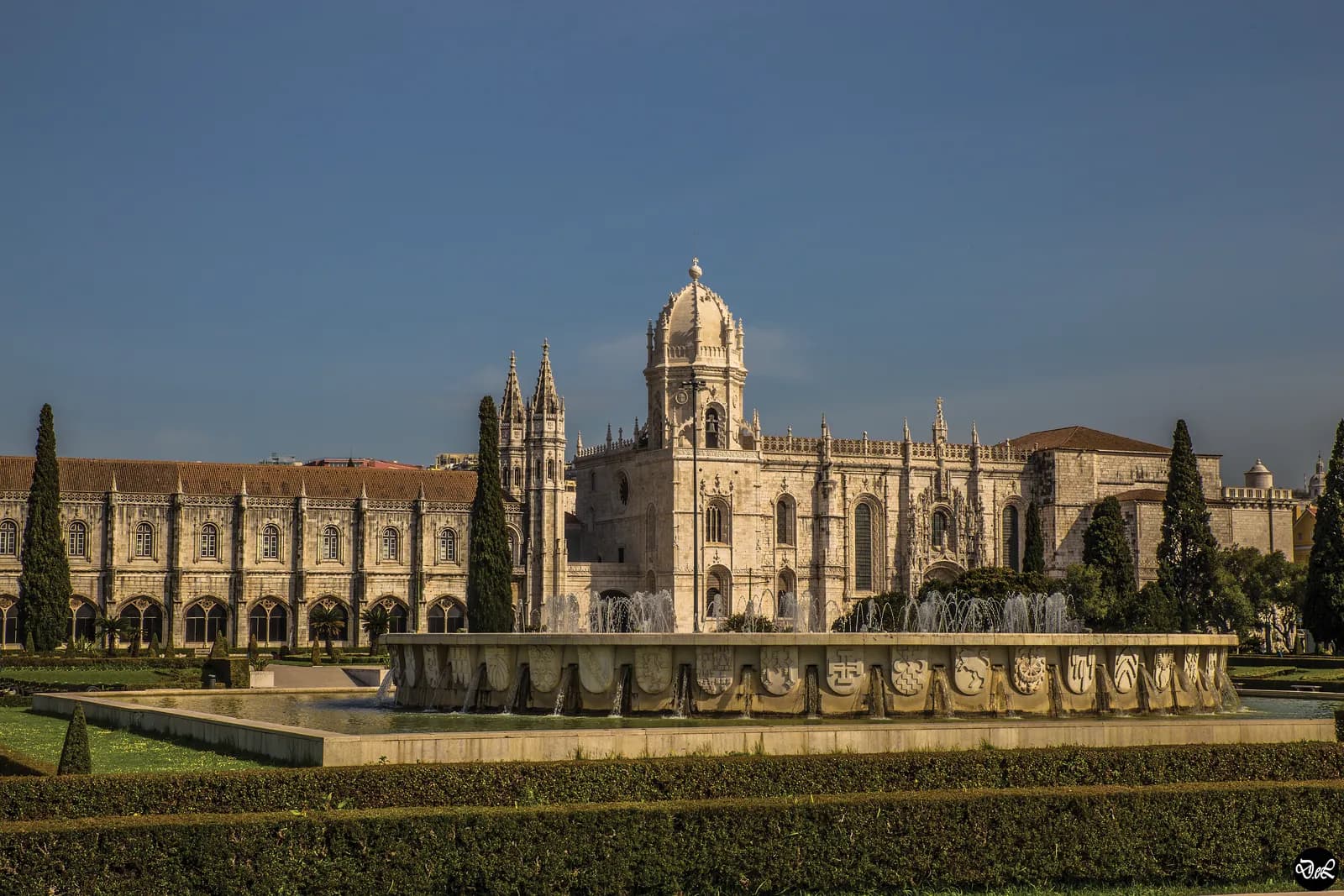
Mosteiro dos Jerónimos (Jerónimos Monastery)
Free church with Vasco da Gama's tomb, paid cloister on timed slots; closed on Mondays