Money, Tipping, Pickpockets and Tourist Traps: Lisbon Street Smarts
First, calibration: violent crime against tourists in Lisbon is genuinely rare. The risks on a port day are of a gentler kind — the crowded-tram pickpocket, the unpriced "special of the day", the flat-rate taxi quote. All are avoidable with the small set of habits below, and none should keep you aboard the ship.
Cash, cards and the euro
- anchorCards work almost everywhere, including contactless and phone wallets; Portugal is heavily card-friendly. A modest cash reserve (€20–40) covers kiosk coffees, market stalls, public toilets and the odd tasca that still prefers notes.
- anchorUse Multibanco ATMs attached to banks, not the bright-coloured standalone "Euronet-style" machines near tourist spots, which quote worse rates and higher fees.
- anchorAlways decline dynamic currency conversion. When an ATM or card terminal offers to charge you in your home currency "for convenience", choose euros — the conversion offered is consistently worse than your bank's.
- anchorCheck the counting, not for scams but for habit: prices in Lisbon are honest and displayed; if a menu has no prices, walk out — that is the tell.
Tipping: how Portugal actually does it
Tipping in Portugal is modest and genuinely optional — service charges are not added, waiters are salaried, and locals typically round up or leave small change. A practical scale for a port day: round up taxi fares to the euro; leave nothing extra for a counter coffee; at a sit-down lunch, 5% for good service is generous and 10% is the ceiling for exceptional. Nobody will chase you down the street either way, and "American-style" 20% expectations exist only in places that have learned to suggest them to tourists.
One related menu custom catches visitors constantly: the couvert. The bread, olives, cheese or fish paste that appear unrequested at your table are not free — touch them and they are billed, each item, per person. They are usually cheap and often good; the point is that it is a choice. A polite "não, obrigado" sends them back at no charge, with no offence taken.
Pickpockets: exactly where and exactly how
Lisbon's pickpockets are professionals with a known map. Their habitat, in order of productivity:
- anchor[Tram 28](/attractions/tram-28) — the single most reliable pickpocket venue in Portugal. The packed vintage carriages, the lurching, the distracted photographers: purpose-built conditions. If you ride it, ride it like a local — bag zipped, worn in front, nothing in back pockets, wallet split from phone.
- anchorThe 15E tram to Belém at mid-morning, for the same reasons at slightly lower density.
- anchorBoarding crushes anywhere: the queue collapse when a tram or a bus opens its doors is the classic moment of contact.
- anchorViewpoint terraces at golden hour — Portas do Sol and neighbours — where everyone's hands hold phones at arm's length and daypacks hang unattended on shoulders.
The counter-measures are boringly effective: front pockets or a zipped crossbody worn forward, phone in hand or zipped away (not in a back pocket, not face-up on a café table), and nothing valuable in any backpack outer pocket. Passengers following these four rules essentially never report losses.
The street sales you should simply smile past
- anchorThe gentlemen around Rossio and Rua Augusta murmuring offers of "hashish, cocaine" are selling bay leaves and flour — a Lisbon institution of sorts. It is technically legal theatre, and total avoidance is the correct response: no eye contact, keep walking.
- anchorRose sellers, bracelet-tie-ers and petition clipboards operate the standard European playbook near Praça do Comércio: anything placed in your hand or on your wrist precedes a demand for payment. Hands in pockets, "não", keep moving.
- anchorRestaurant greeters ("promoters") on Rua Augusta and around the Sé waving laminated photo menus: the food behind them is rarely terrible, merely mediocre at a 30–50% premium. A good Lisbon rule: the quality of a restaurant is inversely proportional to the effort spent pulling you into it.
Restaurant economics: reading a Lisbon menu like a local
- anchorThe prato do dia at lunch is the best value in the city — a cooked main, often with soup and a drink, at workman's prices, served fast (useful on a port clock).
- anchorGrilled fish priced per kilo is legitimate and delicious — but ask for the weighed price *before* it goes on the grill, or the "catch of the day" can surface on the bill at yacht prices.
- anchorA galão (milky coffee) at a stand-up counter costs visibly less than the same at a terrace table on a famous square; both are legitimate, just know which one you are ordering.
- anchorThe Time Out Market is the reliable, no-surprises option: displayed prices, quality floor guaranteed, speed excellent. The romance of a family tasca in Alfama — see the walking guide — is worth one extra step of care with the couvert and the specials.
Taxis and the port-day clock
Lisbon taxis are metered and, ridden by meter, cheap by European capital standards. The friction points cluster exactly where cruise passengers stand: rank drivers proposing flat prices ("twenty euros, anywhere downtown!") that double the metered fare, and scenic-route improvisation for visibly disoriented visitors. The fixes: insist pleasantly on the meter ("taxímetro, por favor"), or use Uber/Bolt where the price is fixed before the car arrives and the route is logged.
Finally, the only genuinely expensive mistake available in Lisbon: cutting the all-aboard margin. Traffic on the riverside avenue thickens badly from 16:00. Whatever the day held, be walking toward the gangway with 45 minutes of slack from downtown, and more from Belém — the full timing logic is in the itineraries guide.
Attractions mentioned in this guide
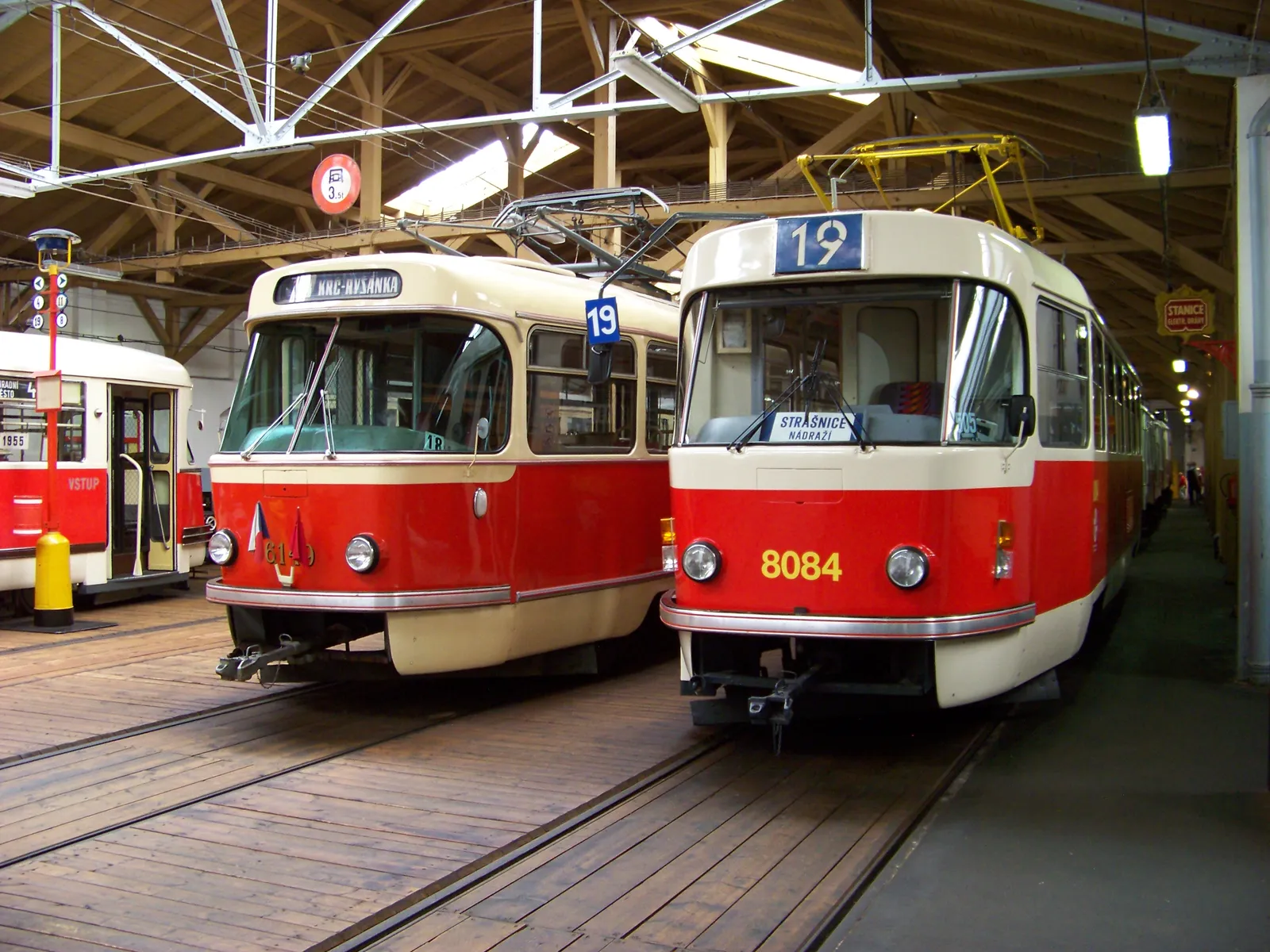
Tram 28 (Eléctrico 28)
A regular Carris public tram line through Graça, Alfama and Chiado: worth riding, if you plan around the queues
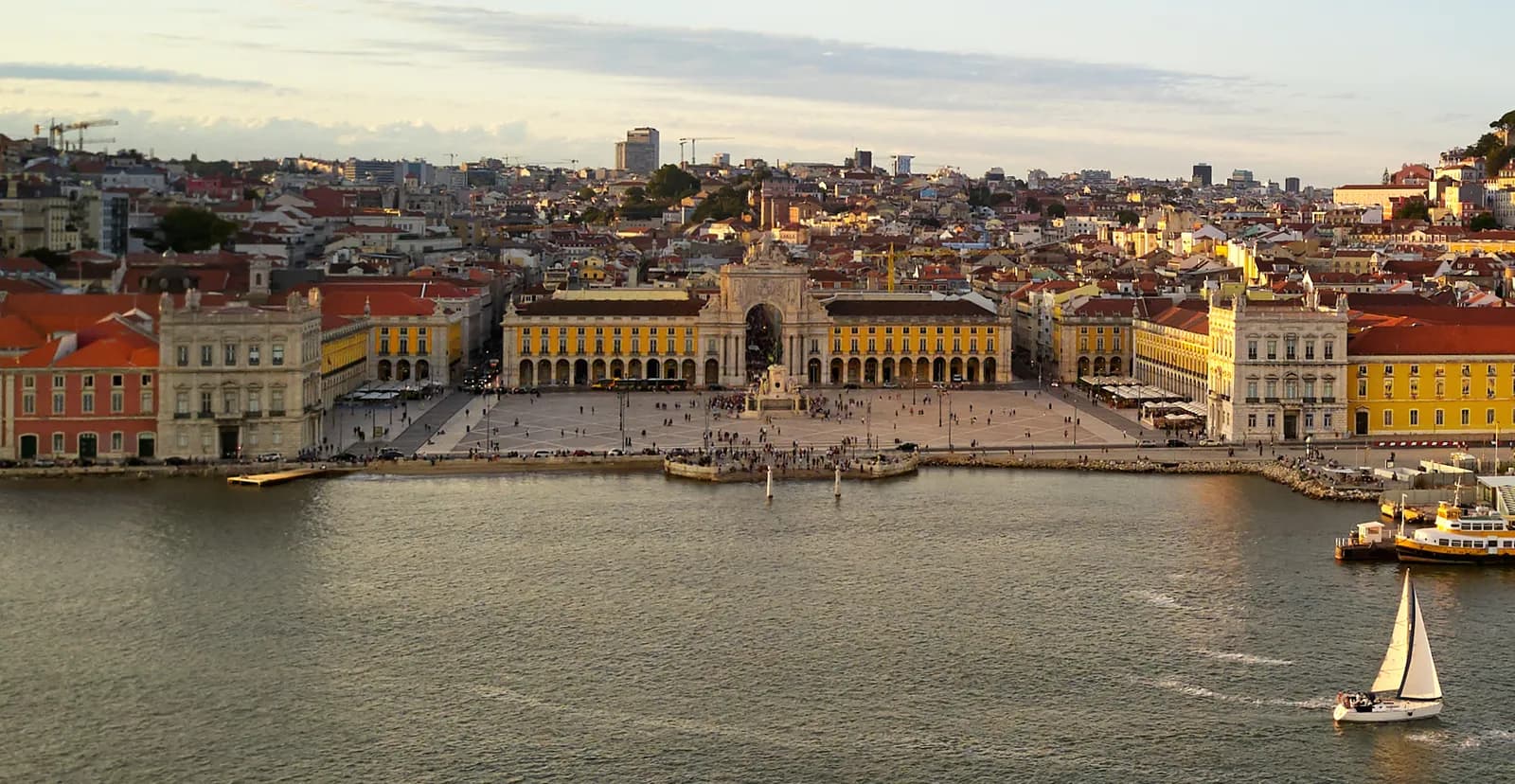
Praça do Comércio (Commerce Square)
The riverside square 14 minutes' flat walk from the cruise terminal, and the natural starting point for a port day in the Baixa
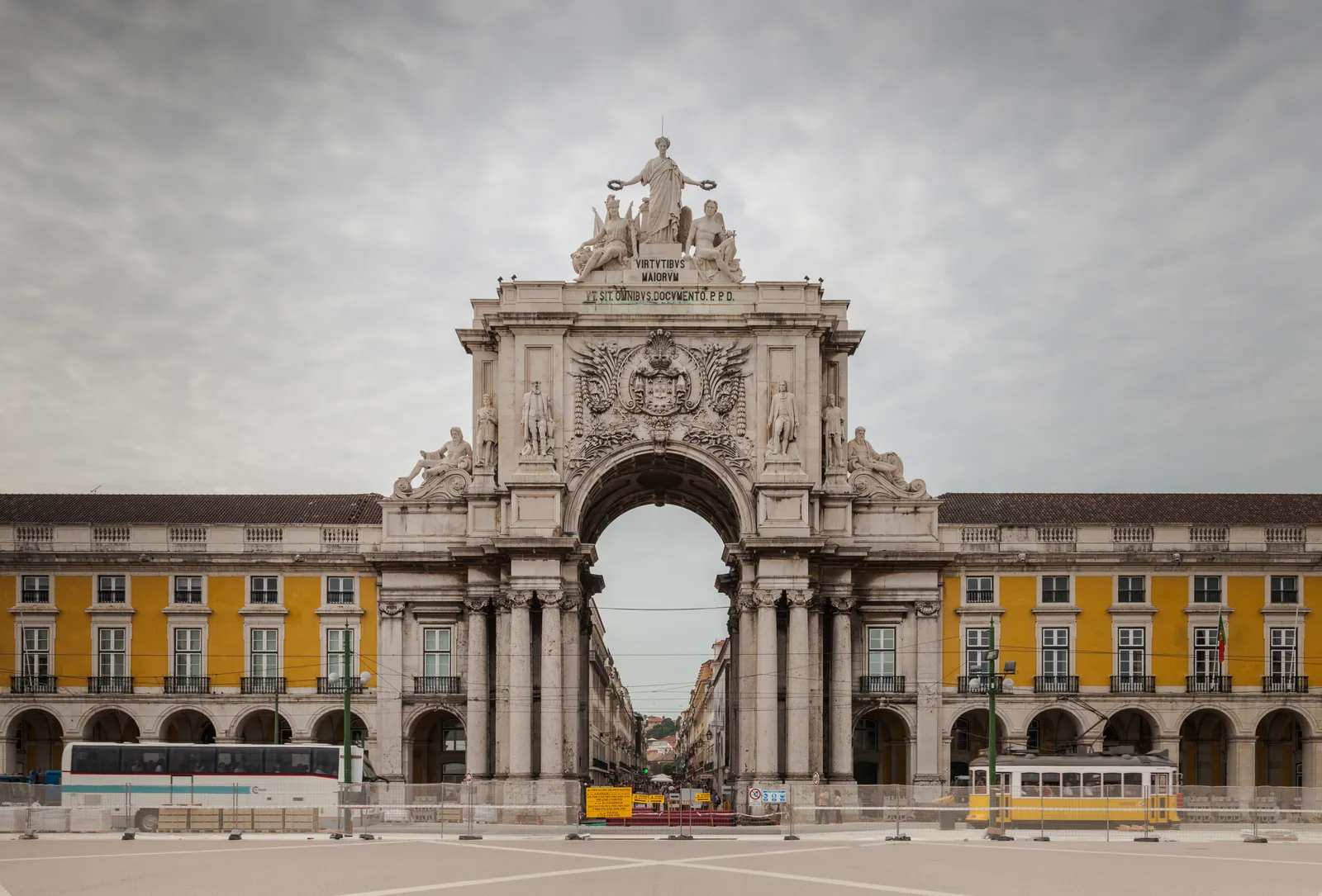
Rua Augusta
The Baixa's main pedestrian street, entered through the arch on Praça do Comércio, under 20 minutes' walk from the ship.
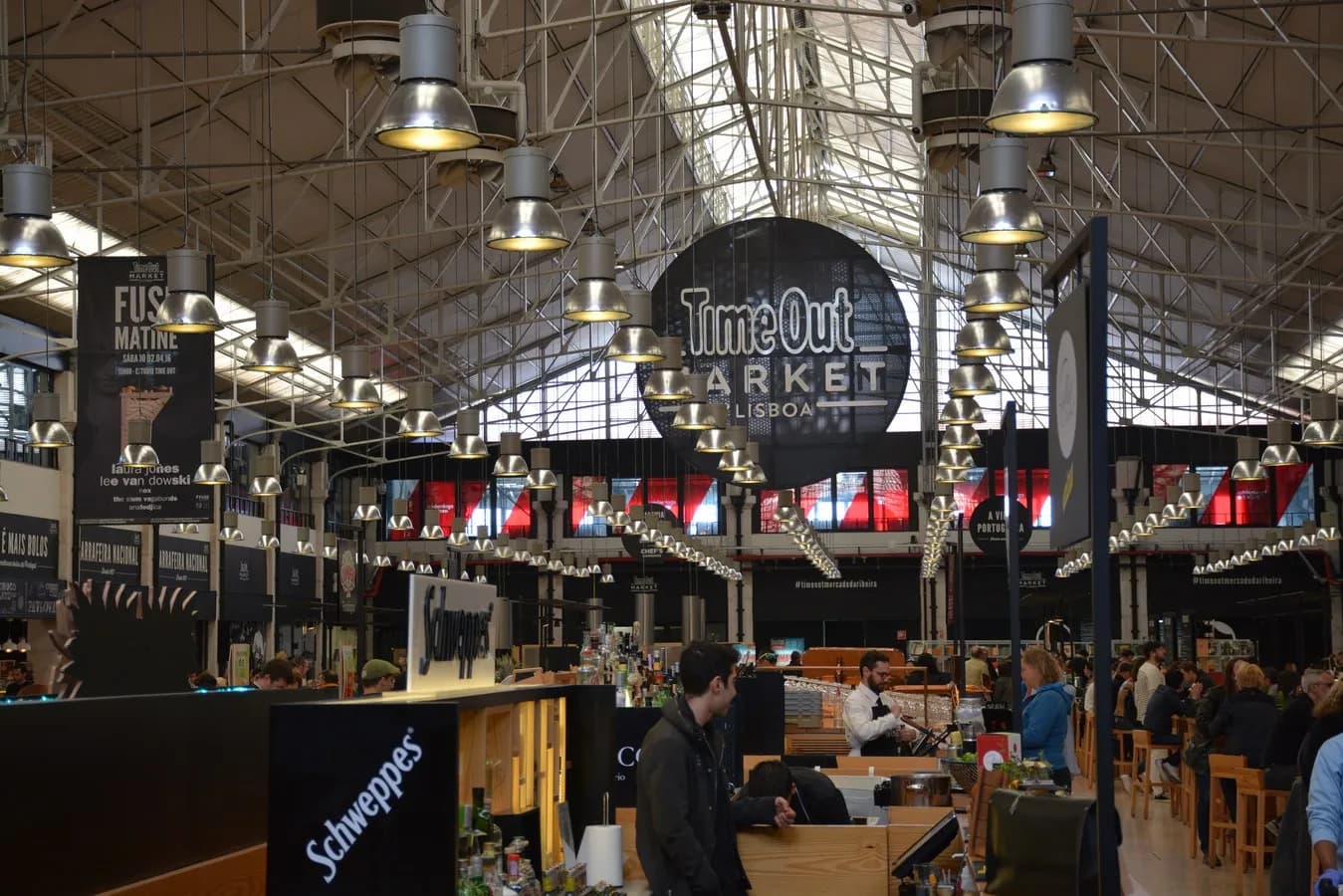
Time Out Market Lisboa
A food hall of 26 Lisbon restaurant counters in the Mercado da Ribeira, handy for a quick lunch between sights