Lisbon on Foot from the Ship: A Self-Guided Alfama Walk
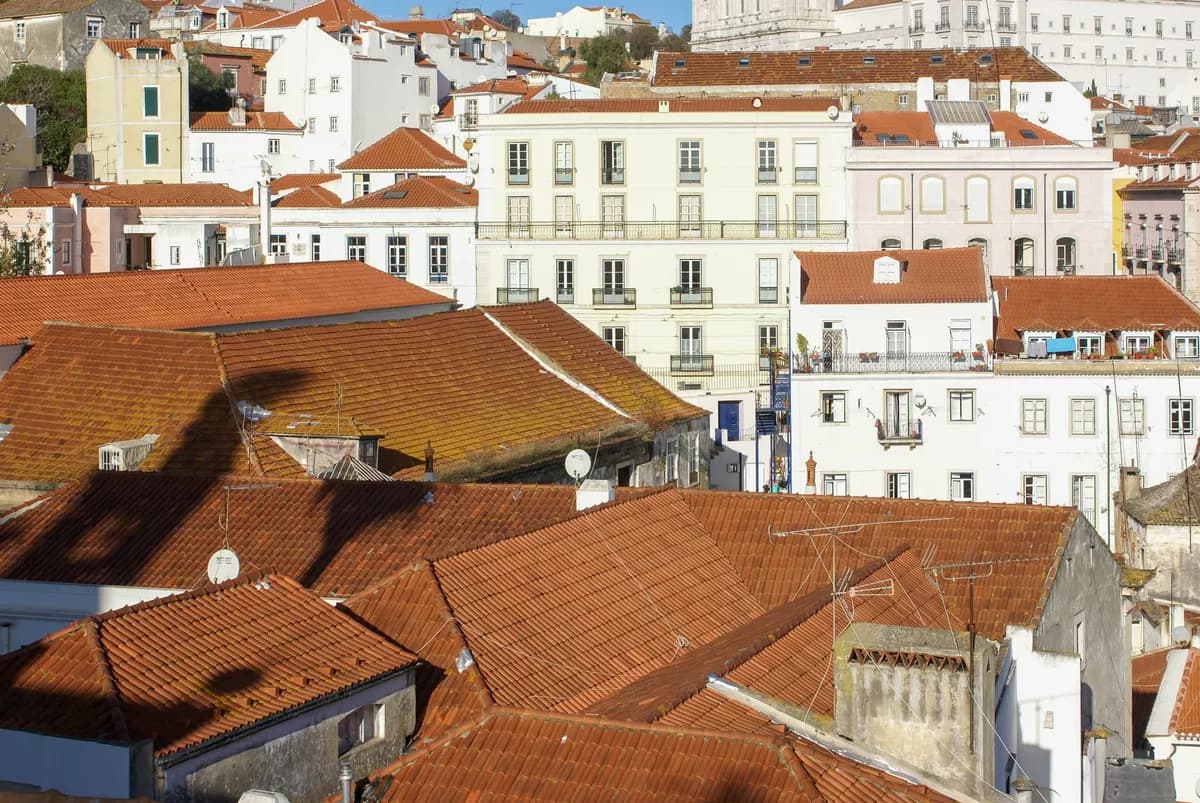
No other major cruise port in Europe drops you this close to the good part. From the gangway at Santa Apolónia / Jardim do Tabaco, Alfama — the medieval quarter that survived the 1755 earthquake — starts literally across the avenue. No shuttle, no metro, no tickets: just a hillside of lanes that predate the discovery of Brazil.
This route runs about 4 km with 120 m of climbing, in a loop of 2.5 to 3.5 hours depending on how often you stop — and stopping often is the correct way to do it. Cobbles throughout: wear real shoes, carry water in summer, and read our safety notes about crowded corners beforehand.
Leg 1 — Terminal to the Casa dos Bicos (15 min, flat)
Exit the terminal and turn left along the river on Avenida Infante Dom Henrique. This first stretch is your warm-up: river on the left, Alfama stacked up the hillside on the right. At Campo das Cebolas — a garden square that was once the city's onion market — stands the Casa dos Bicos, a 1523 palace faced with over a thousand diamond-pointed stones, now home to the José Saramago Foundation. The façade is the sight; step inside only if the Nobel laureate interests you.
Coffee decision point: the kiosks in Campo das Cebolas pour a decent bica (espresso) at local prices. Take it standing, like the locals, and study the hill you are about to climb.
Leg 2 — Casa dos Bicos to the Sé cathedral (10 min, gently uphill)
Behind Casa dos Bicos, take Rua da Padaria uphill. You will pass the church of Santo António, built over the birthplace of Lisbon's beloved saint, and immediately after it the Sé de Lisboa — the fortress-faced cathedral begun in 1147, the year the city was taken from the Moors. Entry to the main church is free; the treasury and cloister are ticketed and skippable on a first visit.
The classic photograph — a yellow Tram 28 grinding past the Sé's twin towers — happens every few minutes. The pavement opposite the façade gives the angle.
Leg 3 — The climb to Santa Luzia and Portas do Sol (15 min, the steep bit)
From the Sé, continue up Rua Augusto Rosa as it bends left and becomes Rua do Limoeiro. This is the route's one honest climb; take it slowly and let the trams pass. Your reward arrives in two instalments:
First, the Miradouro de Santa Luzia — a pergola-draped terrace tiled with azulejo panels, one of which shows Lisbon's waterfront as it looked before the earthquake. Then, 50 metres on, the Miradouro das Portas do Sol: the wide-angle version, looking down across Alfama's rooftops to the dome of the National Pantheon and the river. Your ship is almost certainly in this picture — one of the best "that's ours" photos any port offers.
Above you from here is the Castelo de São Jorge, 10 more minutes of climb. With 4+ hours it is a worthy extension (allow 1.5 hours with the ramparts and queues); on a tighter day the two miradouros deliver the views without the ticket line.
Leg 4 — Down into the maze (45–60 min, the heart of it)
From Portas do Sol, take the staircase (Escadinhas de Santo Estêvão direction) that dives down between the buildings below the terrace. Now abandon precision: the point of the next hour is to be pleasantly lost in the lanes — Rua dos Remédios, Beco do Carneiro, Largo de São Miguel — where laundry crosses overhead, sardines grill in doorways in season, and the church squares are the size of living rooms.
Two anchors to aim for while wandering. The Igreja de São Miguel square is Alfama's village centre. Nearby on Largo do Chafariz de Dentro at the hill's foot sits the Museu do Fado — if the melancholic music you hear leaking from doorways catches you, this small museum explains why it is UNESCO-listed heritage, in about 45 minutes.
Genuine navigational advice for when you want out: downhill always works. Every descending lane in Alfama eventually reaches the riverfront avenue, and the terminal is to the left.
Where to eat on the route
- anchorThe tascas around Largo de São Miguel and Rua dos Remédios: handwritten menus, grilled fish, house wine in jugs. Slower than the ship's buffet and infinitely better. Lunch runs 12:30–15:00; before 12:30 you will share the room with locals.
- anchorThe prato do dia (dish of the day) is the value play everywhere — a main, often with soup, at a fraction of the à-la-carte tourist menus.
- anchorPolitely wave off unrequested starters (bread, olives, cheese) if you do not want them — they are charged if touched, which surprises visitors; details in the money guide.
- anchorFor Fado with dinner you need the evening — usually impossible on a port day. The Museu do Fado, or a café with amália playing, is the daytime version. If your ship overnights, Clube de Fado near the Sé is the classic room.
Leg 5 — The flat return (20 min)
From the Museu do Fado / Chafariz de Dentro corner, the terminal is a flat 15–20 minutes back along the river, past the Santa Apolónia station frontage. If time remains, the terminal building's own rooftop terrace is an underrated last stop — a final panorama of the hillside you just walked, with your ship in the foreground.
Extensions if you are ahead of schedule: continue past the terminal to the Panteão Nacional (National Pantheon) whose white dome you photographed from Portas do Sol — and on Tuesdays and Saturdays, the Feira da Ladra flea market sprawls behind it, Lisbon's centuries-old bazaar of the genuinely random.
This walk is the core of our recommended 4-hour itinerary; pair it with the Baixa and a longer lunch to fill a 6-hour call.
Attractions mentioned in this guide
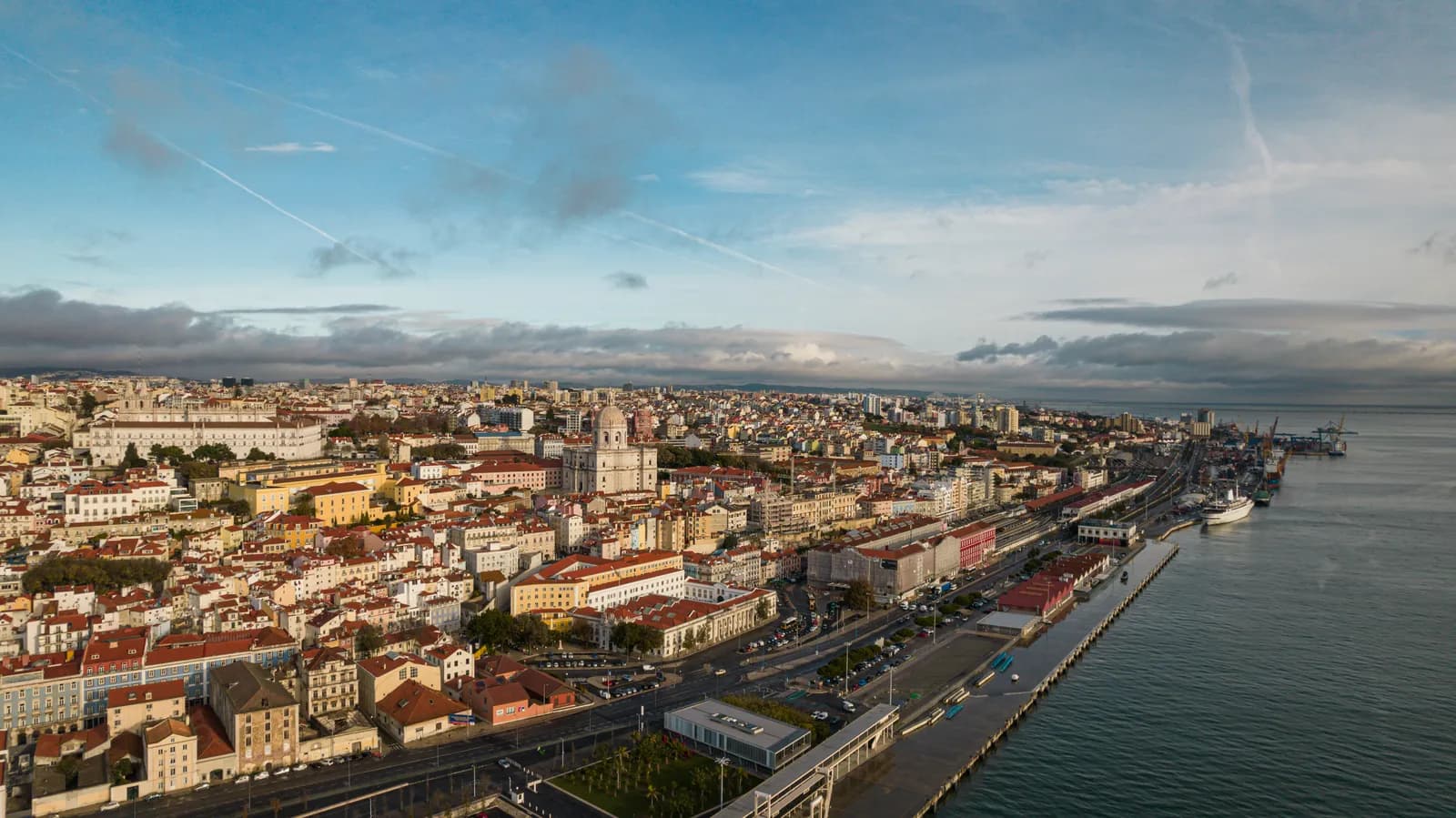
Alfama
Lisbon's oldest quarter begins across the road from the cruise terminal
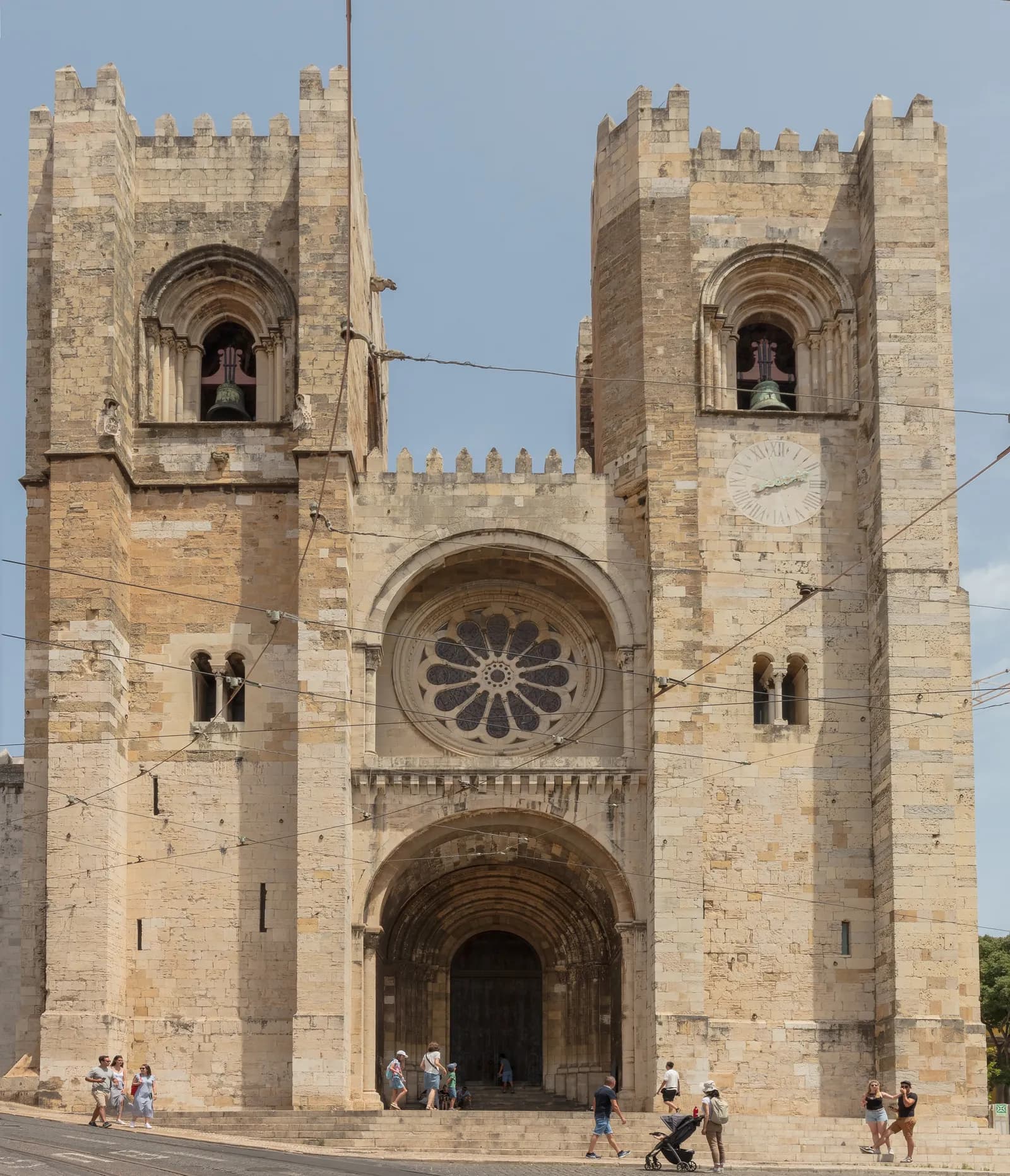
Sé de Lisboa (Lisbon Cathedral)
Lisbon's 12th-century cathedral, a short uphill walk from the ship
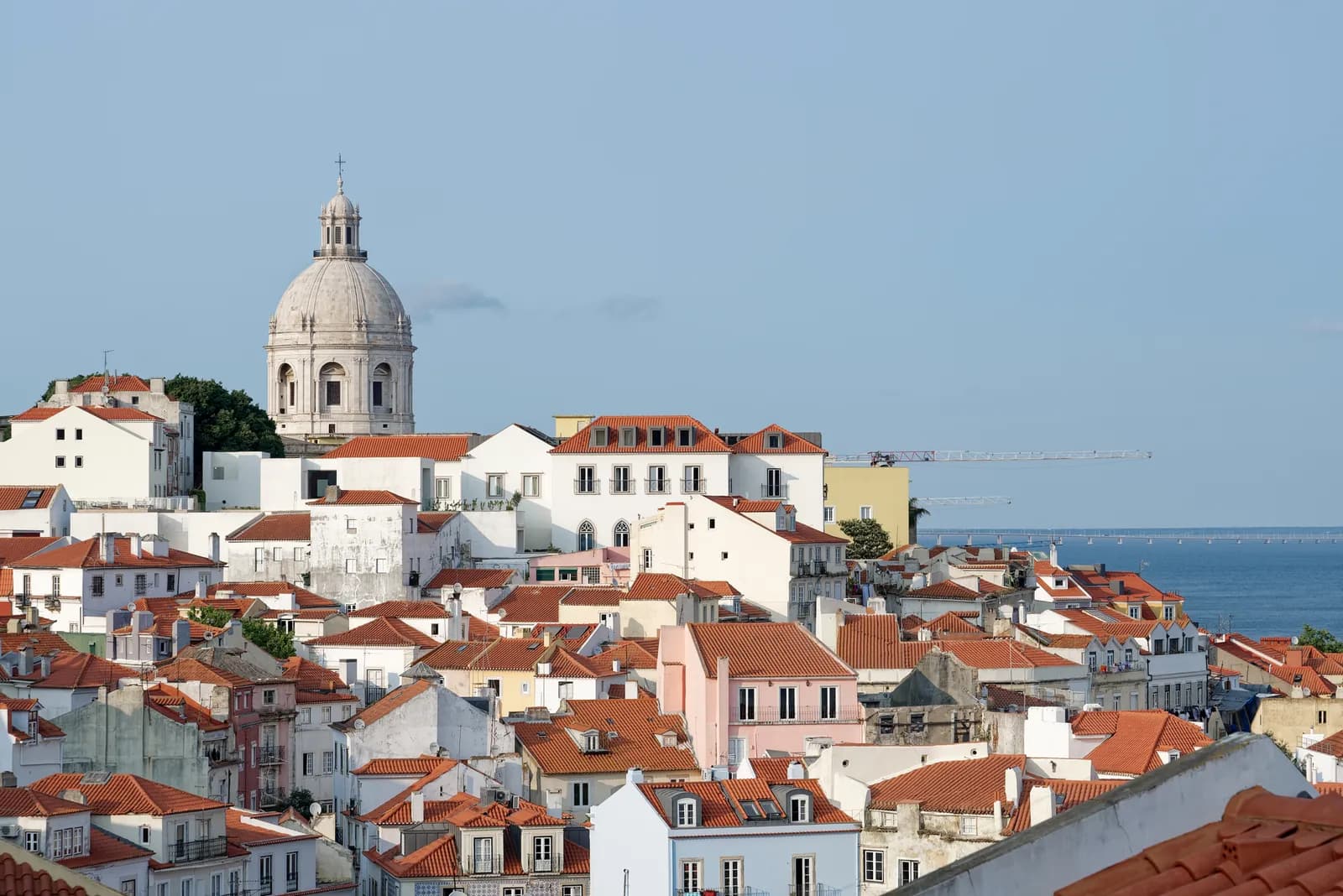
Miradouro de Santa Luzia
Tiled terrace viewpoint over Alfama and the river, next door to Portas do Sol
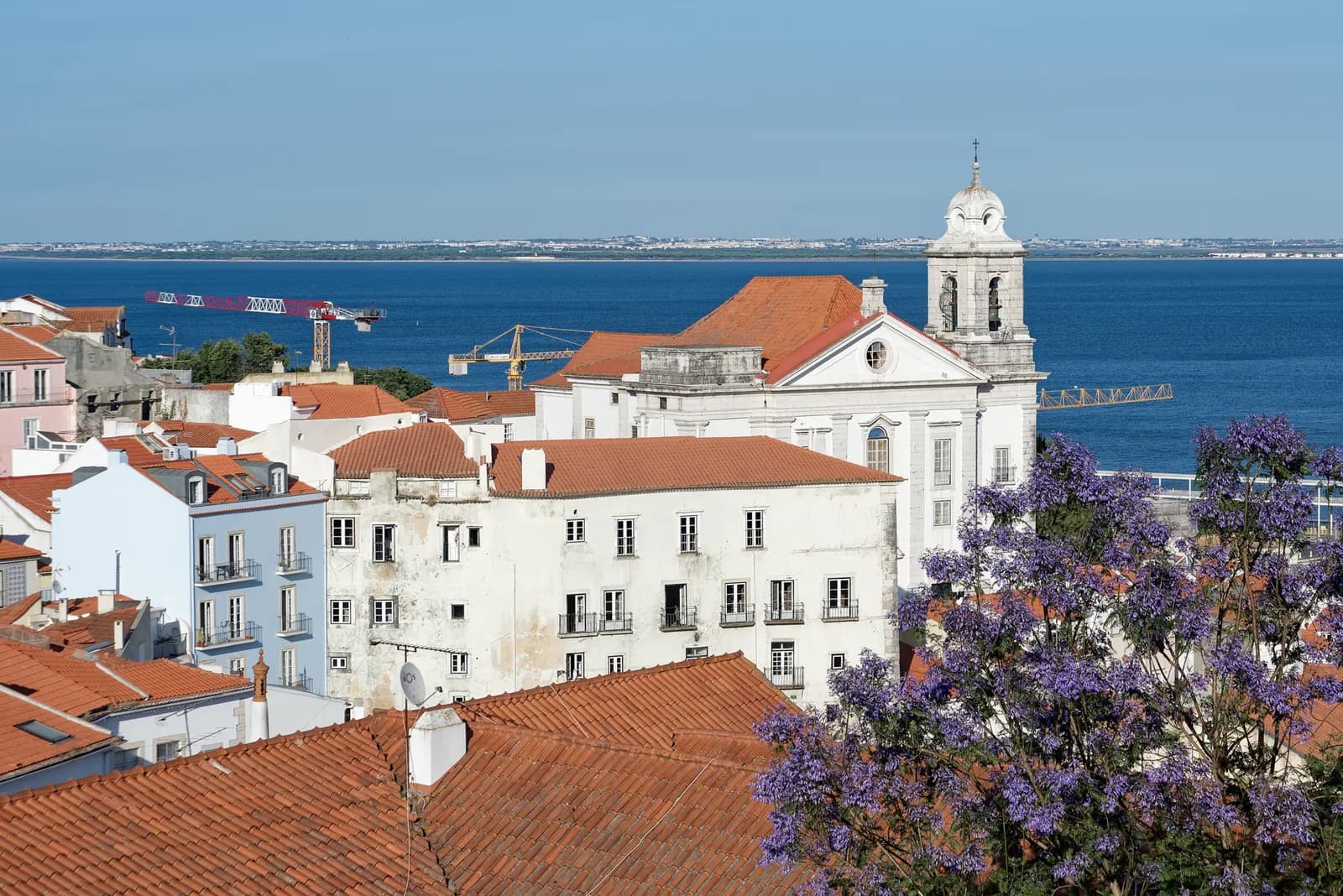
Miradouro das Portas do Sol
Wide viewpoint over Alfama and the river, with tram stop, taxis and a café